
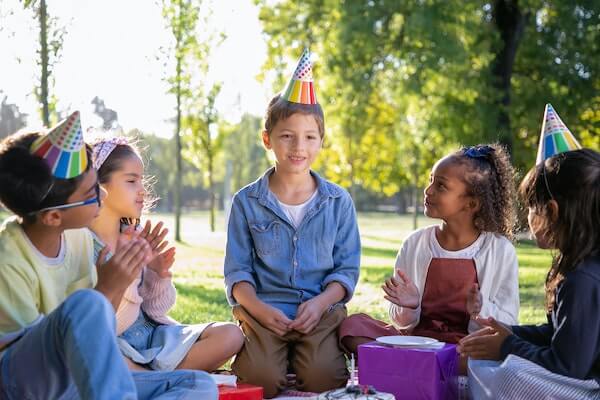
A good kids’ party game is easy to explain, quick to reset and flexible enough for different ages. Choose three or four games rather than trying to run all ten. Keep one quiet option ready for children who want a break.
Choose games for the space and group
Match each game to the youngest guests and the space available. A small backyard suits chalk, hoops and sponge targets. A large park gives you more room for races and an obstacle course.
At a public park, check the council’s booking conditions before using chalk, water, stakes or amplified music. Walk through the play area before guests arrive and move each game away from roads, barbecues and busy paths.
Ten backyard and park party games
-
Obstacle course. Use hoops, cones, pool noodles and chalk lines to mark four or five stations. Children can step through hoops, crawl under a noodle, balance along a line and finish with a beanbag throw.
-
Picture scavenger hunt. Give each team a short list of things to spot, such as a round object, a yellow flower or three different leaves. Ask them to point, draw or photograph each item instead of collecting plants.
-
Egg-and-spoon race. Use wooden spoons with hard-boiled eggs, small potatoes or ping-pong balls. Mark a turning point, then ask each player to walk out and return without holding the object in place.
-
Sack race. Mark a short, straight lane on level grass. Use clean pillowcases for smaller children and reusable sacks for older guests. Run several small heats so the start line does not become crowded.
-
Sponge target toss. Put buckets or hoops at two or three distances. Children score one point for the closest target and more for the furthest. Wet sponges work well on a hot day, while dry beanbags suit cooler weather.
-
Three-legged relay. Pair children of a similar height and loosely join their inside ankles with soft fabric. Give each pair a practice walk before turning it into a relay.
-
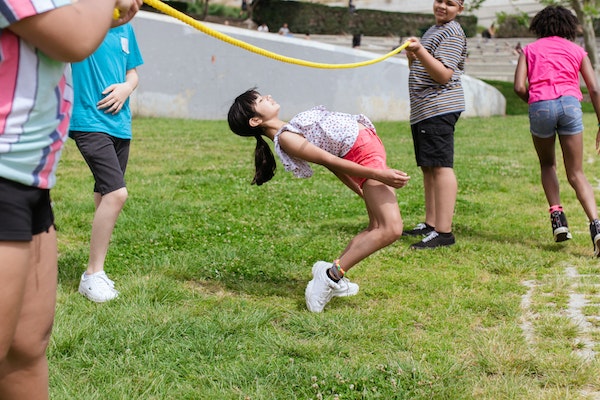
Limbo. Two adults hold a pool noodle while music plays. Lower it a little each round. Let children who do not want to bend under it step over, dance past or help choose the music.
-
Hula-hoop challenge. Set one hoop for spinning, one for rolling and one as a throwing target. Children can move between stations in small groups instead of waiting for one long contest.
-
Chalk challenge. Draw a hopscotch course, a twisting balance line and several jumping spots. If chalk is not allowed, make the same course with hoops and removable cones.
-
Pass the parcel. Decide before the party whether there will be one prize or a small item in each layer. A QUT psychologist told ABC there was no single version during its Bluey parcel debate. Explain your rule before the music starts.
Plan a simple running order
Start with a game that everyone can join without teams. Move to two energetic games, pause for food or cake, then offer one final group game. Allow ten to fifteen minutes for each game at a primary-school party.
Set out each game before guests arrive. Keep spare spoons, hoops and beanbags in one box. If attention drops, finish the round instead of adding more rules.
Make competition easier to manage
Explain the finish line, boundaries and scoring in two or three sentences. Demonstrate one round, then begin. Choose team games when different ages are playing together, and change teams between rounds.
Not every game needs a prize. Stickers for everyone, team points or choosing the next song can keep the focus on playing. For pass the parcel, tell parents and children which prize rule you chose before the first round.
Adapt each game without stopping the party
Keep the goal but change the movement. A running race can become a walk, roll or throwing challenge. Shorten the course, move a target closer or let a child play with an adult partner.
Offer a helper role for anyone who wants to sit out. They can start the music, count points, hold a marker or reset equipment. This keeps the party moving without forcing every child into every game.