
Some unusual sports are easier to try in Australia than their names suggest. Others need a specialist court, pool or commercial operator. This guide explains what actually happens in nine eye-catching sports and activities, what equipment they use, and how realistic it is to find a local session.
Start with KeepActive’s activity directory, where smaller sports may appear under broad categories such as water sports or “other”. The Australian Sports Commission’s sports directory also lists recognised national organisations for flying disc and underwater sports. An activity can still operate in Australia without appearing there, often through community groups or occasional events.
1. Kabaddi: raid, tag and return
Kabaddi is a contact team sport built around short raids. One raider crosses into the opponents’ half, tries to tag a defender and return safely. The defenders try to stop the raider from getting back. International rules add timing, boundary and scoring details, so a casual explanation only captures the basic idea.
It needs a marked court rather than costly personal equipment. Australian competitions are often organised through local cultural and sporting communities, and the exact format can vary. A first-timer should check whether a session is social, junior or competitive, and ask the organiser what contact is expected.
2. Sepak takraw: volleyball without hands
Sepak takraw is played over a net, usually by teams of three. Players control and return the ball with their feet, knees, chest and head rather than their hands. The overhead kicks are spectacular, but new players can begin with basic touches and serving practice.
The sport also has a living Australian community. ABC News reported that about 50 players travelled from around Victoria for a Bendigo tournament in November 2025. One participant, Nay Ta Gay Wah, had learned the sport in a Thai refugee camp at 12 and was still playing three decades later. That story shows why a “lesser-known” sport may be deeply familiar inside the communities that sustain it.
3. Bossaball: a court with trampolines
Bossaball combines a net game with an inflatable court and a trampoline on each side. Two teams try to ground the ball in the opposing court. Under the published format, teams have four players, may use up to five touches, and can play the ball with their hands or other parts of the body under different touch limits.
The specialist court is the main barrier to access. It is not something to reproduce with a backyard trampoline. At the time of writing, we could not confirm a regular Australian league, so treat the video as an introduction and look for a professionally operated event if you want to try it.
4. Hardcourt bike polo: mallets on wheels
The video below shows hardcourt bike polo, the urban form of bicycle polo, rather than the separate indoor discipline known as cycle-ball. Riders use mallets to move a ball towards the opposing goal while staying on their bikes. Local rules can differ, but putting a foot down commonly requires a rider to leave play briefly and tap back in at a marked point.
A bike, helmet and sport-specific mallet are the starting equipment. The rules archive shows how organised hardcourt bike polo is structured, although anyone joining an Australian session should follow the host club’s current rules and equipment guidance.
5. Ultimate: score with a flying disc
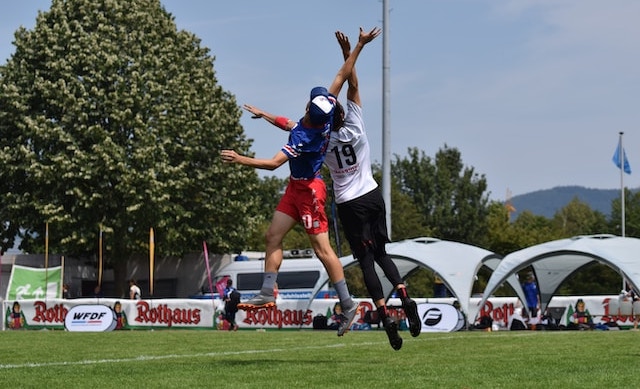
Ultimate is a non-contact team sport played with a flying disc. A team scores when a player catches the disc in the attacking end zone. The thrower cannot run with it, and an incomplete pass or interception gives possession to the other team. The sport is usually self-officiated, placing responsibility for fair play on the players.
Of the activities in this list, ultimate has one of the clearest Australian participation pathways. Look for a beginner-friendly club or social league and confirm the session format before arriving. The current WFDF rules are helpful if you want to understand the full game rather than the short video version.
6. Kho kho: a tactical chase
Kho kho is a team tag sport from India. In the traditional format, members of the chasing team sit in a central lane facing alternating directions while an active chaser pursues defenders around the field. The chaser can transfer the chase to a seated teammate, creating rapid changes of direction and tactical decisions.
The sport has an organised Australian presence. Its national body says it sent men’s and women’s teams to the inaugural 2025 Kho Kho World Cup and is developing grassroots participation. That makes its channels a better starting point than assuming the sport is unavailable locally.
7. Underwater hockey: a puck on the pool floor
Underwater hockey is played by two teams of six in the pool. Players wear a mask, snorkel and fins, then use a short stick to move a weighted puck along the bottom towards a goal trough. They surface to breathe and return to play, so it is a sequence of short dives rather than one long breath-hold.
The sport’s national body says players also use a glove and an ear-protective cap. You should be a competent swimmer, but a club can explain the equipment and whether it offers a supervised beginner session. Australia has clubs and national competition, making this another unusual sport with a genuine local pathway.
8. Zorbing: commercial adventure recreation
Zorbing is better described as an adventure activity than a conventional team sport. A participant rides inside a large inflatable sphere while it travels along a purpose-built course. The activity was commercialised in New Zealand in the 1990s; the original Rotorua operator’s history explains how downhill ball rolling developed there.
This is an operator-led experience, not a do-it-yourself activity. Site design, track testing, equipment condition and trained staff all matter. If you find an Australian provider, check its current operating requirements, restrictions and safety information directly before booking.
9. Skijoring: skiing under tow
Skijoring means a skier is pulled across snow, traditionally by dogs or a horse and, in some modern versions, by a motorised vehicle. Its roots are Scandinavian, not Polish. Competitive formats vary: western American horse events may include gates, jumps and rings, while dog-powered versions look quite different.
An AP report notes that the sport has no single global ruleset. It also requires suitable snow, trained animals or specialist machinery, and experienced organisers. For most Australians it is more likely to be a travel experience or demonstration than a regular local activity.
How to choose one to try
Begin with access, not spectacle. Ultimate, underwater hockey, kabaddi, sepak takraw and kho kho can have club or community pathways in Australia. Hardcourt bike polo depends on a local crew. Bossaball, zorbing and skijoring need specialist facilities or operators.
Contact the organiser before attending and ask whether beginners are welcome, what equipment is supplied, what the session costs and whether there are age or ability requirements. A sport can look intimidating in a highlight video while still offering a friendly introduction—but the right first session makes all the difference.