Bowling on the Green: A Beginner's Guide to Lawn Bowls

Sherol S - profile photo
By - Published
Bowling on the Green: A Beginner's Guide to Lawn Bowls

Are you curious about lawn bowls but not quite sure what it's all about? Maybe you've heard about it but haven't fully grasped the details. Don't worry! Lawn bowls is a fascinating game that welcomes beginners and experts alike. It's often described as easy to learn but hard to master, blending strategy, skill, and social fun. Let's explore the world of lawn bowls together and find out why it's loved by people of all ages.

What is Lawn Bowls?

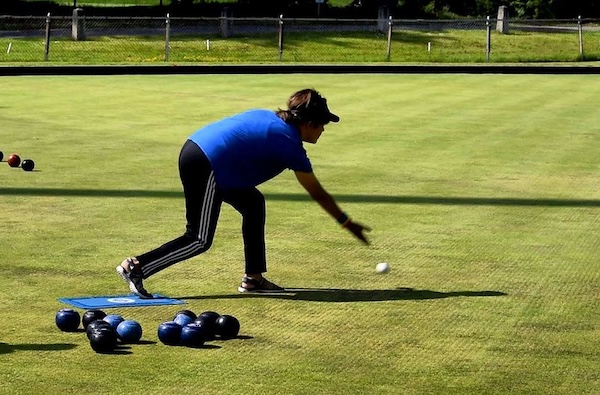
Imagine rolling slightly asymmetrical balls (called bowls) across a pristine green surface towards a smaller white ball known as the jack. The goal? To get your bowls as close to the jack as possible, while strategically outmaneuvering your opponent. It's a game of precision and finesse, played both indoors and outdoors on meticulously maintained greens.

How It's Played

Lawn bowls is played on a green divided into playing strips called rinks. Players take turns rolling their bowls from one end of the rink to the other, aiming to build a cluster of bowls around the jack, which serves as the target. Each end, or segment of play, presents new challenges and opportunities for players to showcase their skills.

Setting Up the Game

To start a game of lawn bowls, players gather on either end of the rink. One player flips a coin to determine who will deliver the jack first. The player winning the coin toss then lays the mat and rolls the jack to the other end of the rink. Once the jack comes to rest, it's aligned to the center of the rink, and the game officially begins.

Rolling the Bowls

With the jack in position, players take turns rolling their bowls from the mat towards the jack. The key is to gauge the speed and direction of the roll, aiming to place your bowl as close to the jack as possible. Bowls can curve outside the boundary of the rink but must come to rest within the boundary to remain in play.

Scoring and Strategy

Scoring in lawn bowls is straightforward yet nuanced. Points, or shots, are awarded based on the proximity of each player's bowls to the jack. The closer your bowls are to the jack than your opponent's, the more shots you earn. It's a game of inches, requiring careful calculation and strategic placement of each bowl.

End of Play

Once each player has delivered all their bowls (usually two, three, or four depending on the competition), the distance from the jack to the closest bowls is determined, and points are awarded accordingly. The exercise is then repeated for the next end, across a designated number of ends, until a winner is declared.

Health Benefits of Lawn Bowls

Beyond the thrill of competition, lawn bowls offers a myriad of health benefits. It's a low-impact sport that promotes improved fitness, coordination, and mental wellbeing. For older adults, in particular, it provides a fun way to stay active and socially connected.

Physical Fitness: While the pace of lawn bowls may seem leisurely, the game actually provides a great workout. Walking back and forth across the green, bending to deliver bowls, and maintaining balance all contribute to improved cardiovascular health, muscle tone, and flexibility.

Mental Wellbeing: Engaging in lawn bowls can also have positive effects on mental health. The focus required to strategise each shot, the camaraderie among players, and the satisfaction of skillfully executing a bowl can boost mood, reduce stress, and enhance overall mental wellbeing.

Social Interaction: One of the greatest joys of lawn bowls is the sense of community it fosters. Whether you're playing with friends at a local club or participating in a casual barefoot bowls session, lawn bowls provides ample opportunities for social interaction and connection, which are essential for mental and emotional health.

Preventing Injury

While lawn bowls is generally a safe sport, it's essential to take precautions to prevent injury. Warm-up exercises, proper technique, and wearing appropriate footwear can help minimise the risk of strains and sprains. Additionally, staying hydrated and practicing sun safety are crucial, especially during outdoor play.

Getting Started

Ready to dive into the world of lawn bowls? Take the first step by joining a local bowling club, where you'll find a welcoming community of players eager to share their passion for the sport. Keep an eye out for "come-n-try" day events or local bowling social play sessions, perfect for newcomers to experience the thrill of lawn bowls in a relaxed setting. And don't forget about barefoot bowls—these casual sessions are a fantastic way to dip your toes into the game while enjoying the company of friends. So, what are you waiting for? Grab your bowls and head to the green for an unforgettable lawn bowls experience!

Suggested articles

Get Active for Less: The Changes Proposed to Make Fitness More Affordable in Australia

Get Active for Less: The Changes Proposed to Make Fitness More Affordable in Australia

1 week ago

With the cost of living biting hard, getting active can feel like the last thing you can afford. But a bold new proposal from Australia's peak fitness body could be about to change that — with $500 family vouchers for gyms and studios, tax-free gym perks through your employer, and even the ability to get a referral to a personal trainer from your GP. Here's what's on the table in the 2026 Federal Budget — and why it matters for every Australian trying to get moving.

Can an E-Bike Be the Key to Your Fitness Journey?

Can an E-Bike Be the Key to Your Fitness Journey?

1 week ago

If you’ve ever felt that traditional cycling was too demanding or that injuries were holding you back from staying active, you aren’t alone. A recent qualitative study on the NZ HIKO e-bike programme highlights how electric bikes are acting as a powerful "circuit breaker" for inactivity. By reducing the physical strain on joints and making hills manageable, e-bikes are helping people manage chronic conditions like Type 2 diabetes and arthritis while providing a significant boost to mental wellbeing. Discover how this "power-assisted" movement is making fitness more inclusive, social, and achievable for Australians of all fitness levels.

Stronger Together: Why Social Connection is the Secret Ingredient to Staying Active

Stronger Together: Why Social Connection is the Secret Ingredient to Staying Active

2 weeks ago

New research reveals that for older adults, physical health and social circles are two sides of the same coin—offering a powerful strategy to fight loneliness while staying fit. Recent findings suggest that treating strong social networks and physical activity as "inextricably linked" can dramatically improve well-being, yet nearly 57% of Australians over 65 still struggle to meet daily activity guidelines. From the motivating power of a local walking group to the "social glue" of community events, discover why finding your community is the most effective medicine for a healthier, more connected lifestyle.

The Resolution Trap: Why ‘All-or-Nothing’ is the Enemy of Consistency

The Resolution Trap: Why ‘All-or-Nothing’ is the Enemy of Consistency

1 month ago

The "New Year, New Me" energy is a powerful motivator, but it often comes with a hidden trap: the all-or-nothing mindset. Many of us start January with rigid fitness resolutions, believing that if we can't commit to a full hour at the gym or a high-intensity session, it’s not worth doing at all. However, groundbreaking research reveals that this psychological rigidity is exactly why most resolutions fail by February. To make 2026 the year your fitness goals actually stick, you need to swap "perfection" for "flexibility." From embracing micro-workouts to finding accountability in local community sports groups, learn how to reframe your thinking and stay active for the long haul—even when life gets in the way.

More Than Just a Walk: How Outdoor Groups Build Community for CALD Women

More Than Just a Walk: How Outdoor Groups Build Community for CALD Women

1 month ago

Beyond the physical benefits of exercise, getting outdoors provides a vital pathway for social connection and cultural exchange. Drawing on the 2025 SAFE research by RMIT University, we explore how community-led outdoor groups are helping women from culturally and linguistically diverse (CALD) backgrounds overcome barriers to participation. From reducing isolation to building leadership skills, discover how inclusive sports and nature-based activities are redefining what it means to belong in the Australian outdoors and how local clubs can create more welcoming spaces for everyone.

Looking to get active?

Here is a few options to explore: