
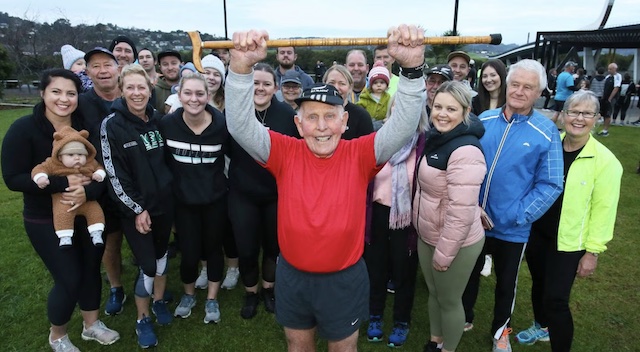
Photo: Tania Whyte/NZ Herald
Colin Thorne began parkrun at 93. By age 100, the former New Zealand dairy farmer had completed his 175th parkrun.
His story is not about chasing a fast time. It shows how one person changed his activity as he grew older. Thorne moved from marathons to a weekly five-kilometre event that he could walk with support.
His running career began after retirement
Thorne did not start running until he retired from dairy farming at 64. He then completed 50 marathons and 102 half-marathons. His long-distance record came from almost three decades of running, not a sudden start in his nineties.
He later left longer races behind. The official parkrun profile page records that he began parkrun at 93. This gave him a shorter, regular event close to home in Whangārei.
He changed how he covered five kilometres
At 100, Thorne used a walking stick during parkrun. He had undergone a knee replacement at 89. These details make his later achievement clearer: he kept taking part, but adjusted how he moved.
He also had support around him. Other parkrunners shared the course with him. His experience shows a practical shift from long races to a repeatable community event.
His 175th parkrun brought people together
In January 2024, runners gathered in Whangārei for Thorne's first parkrun after his 100th birthday. Visitors from other parkruns joined his local group. He finished the weekly five-kilometre event and reached 175 completions.
The milestone connected several parts of his story. He had started running at 64, stopped longer races and then began parkrun at 93. The shorter event gave him a way to keep participating as his pace and support needs changed.
Australian guidance allows different kinds of activity
Thorne's record is unusual and should not become a target for every older person. Current Australian movement guidance includes several types of activity for people aged 65 and over.
The guidance recommends moderate-to-vigorous activity for 30 minutes on most days. It also includes strength work on two days and balance or coordination activities on three days. Several hours of light activity each day are part of the same guidance.
Those recommendations are broad, while each person's health and ability are different. Thorne's story offers one example of adapting an activity over time. It does not set a training plan for other older adults.
Watch Colin's milestone parkrun
The original parkrun video from this post is preserved below.