
Disclaimer: The information in this article is general in nature and is not intended to be a substitute for professional medical advice, diagnosis, or treatment. Always seek the advice of your doctor or other qualified health professional before starting any exercise programme or with any questions you may have regarding a medical condition.
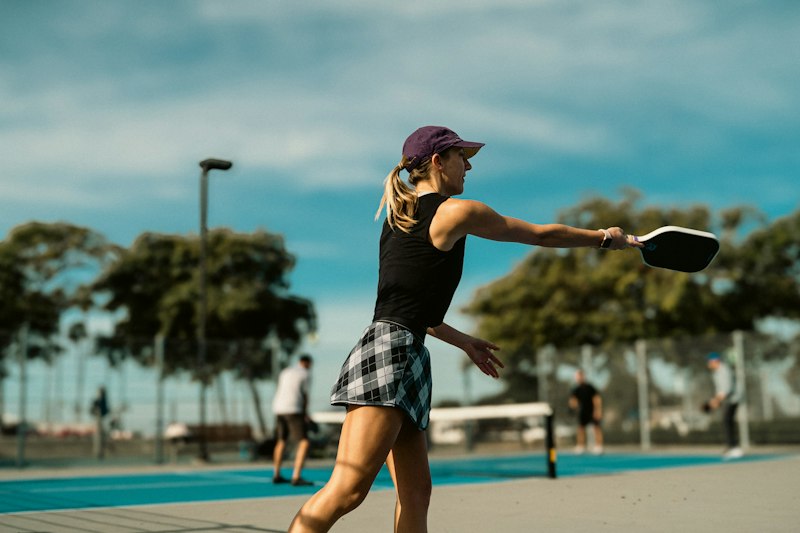
Pickleball is one of the easiest racquet sports to pick up. The court is small, the serve is underarm and most games are doubles, so you share the court with a partner. Most clubs and venues have paddles you can hire, so you do not need to buy gear to try it.
Why pickleball suits beginners
You play pickleball with a solid paddle and a light plastic ball with holes, hitting it over a low net. Our pickleball basics guide covers the court layout and equipment in more detail.
Several features make the first few games easier than in other racquet sports:
- The serve is underarm. Beginners do not need to learn an overhead serve before they can start a game.
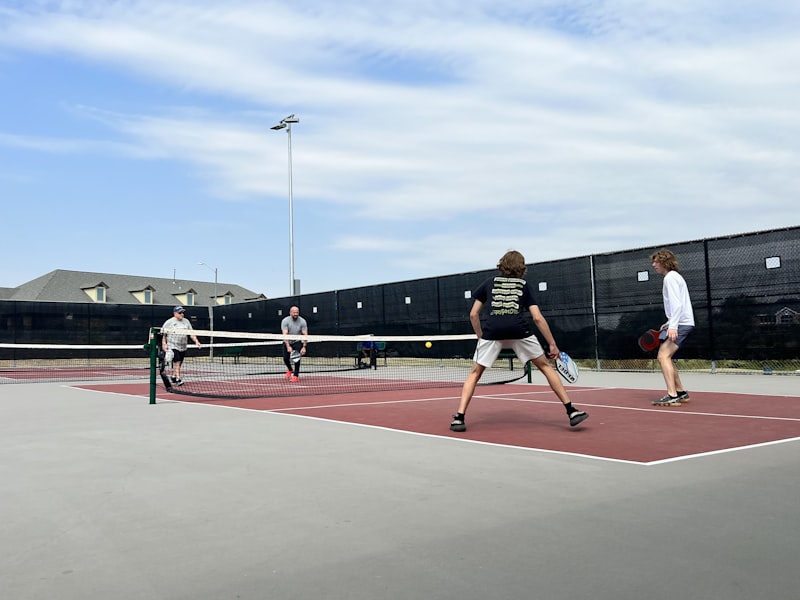
- The court is small. It is the size of a badminton court, about 6.1 by 13.4 metres, so there is much less ground to cover than in tennis.
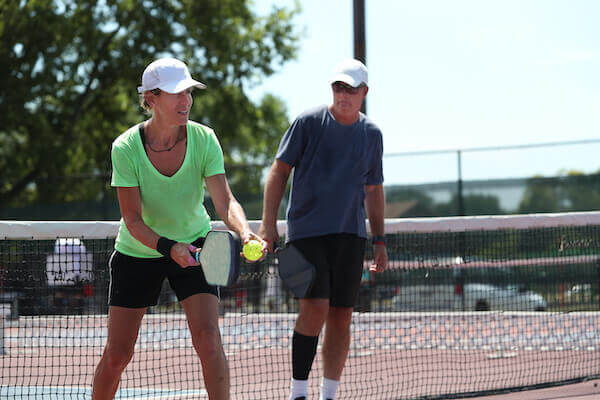
- Most games are doubles. A partner covers half the court.
- Games are quick. Most go to 11 points, so you play with several different people in one session.
Many good shots in pickleball are soft and placed rather than hit hard. A newer player can often keep a rally going with control rather than power. That makes it easier to mix with people of different ages and fitness levels.
Four rules to know before your first game
You do not need the full rule book on day one. Beginner sessions often teach them on court, so ask what the session covers. These four rules cover most of what happens in a social game, and Tennis Australia's rules guide explains each in more detail.
- Serve underarm and diagonally. The serve goes across the court into the opposite service area. It must clear the kitchen, and a serve that lands in the kitchen or on its line is a fault.
- Let the first two shots bounce. The receiving team lets the serve bounce before returning it. The serving team then lets that return bounce. After both bounces, players can hit the ball in the air.
- Stay out of the kitchen when volleying. The kitchen is a 2.13-metre (7-foot) zone on each side of the net. Its official name is the non-volley zone. You cannot volley while standing in it or touching its line. You can step in to play a ball that has bounced there.
- Play to 11 and win by 2. In traditional scoring, only the serving team can win a point. Some venues use rally scoring instead, where every rally counts and games may go to a different total.
Scoring is the part most new players find confusing. In doubles, the score is called as three numbers: the serving team's score, the receiving team's score and the server number (1 or 2). So 3-3-1 means the teams are tied at 3 and the first server is serving. Ask your partner to call it for your first few games.

What to expect at your first session
Many clubs run sessions labelled beginner, intro or "come and try". These are the best place to start. Ask whether a coach or experienced member explains the rules before games start.
Social or open play sessions work differently. At many open sessions, players rotate partners, so you may not need to bring one. Ask the club how its open play works. Some open sessions are for players who already know the rules, so ask whether beginners are welcome first.
Expect your first session to feel social. For Melbourne retiree Gary, the social side and new friendships became a big part of the sport's appeal. If meeting people is part of your goal, our article on making friends later in life covers how to get past the awkward first visit.
What to wear and bring
You need very little for a first session:
- Court shoes. Pickleball involves quick stops and sideways steps, which is what court shoes are made for.
- Comfortable clothes you can move in.
- Water, a hat and sunscreen if you are playing outdoors.
- A paddle is optional at first. Hire or borrow one until you know you enjoy the sport.
Some players also wear protective glasses. A 2024 article in the journal Eye noted that no eyewear was required at any level of the sport. It says protective eyewear can greatly reduce the risk of eye injury. It suggests people at higher risk of retinal detachment should particularly consider it.
Costs to check before you go
Casual fees vary by club and city. Check the fee, and whether paddle hire is included, before you go.
If you keep going, you might buy your own paddle. Ask whether membership lowers the session fee and whether regular players need to join after a few visits.
Staying safe as a new player
Our article on the health benefits of pickleball covers the upside. Like any sport, it carries some injury risk, and falls are the most common cause.
A US study of emergency department visits from 2013 to 2022 found that falls caused about two-thirds of pickleball injuries. Most injured players were aged 65 to 80, and fractures were the most common diagnosis. The study only counted injuries serious enough for a hospital visit, so it does not show how often minor injuries happen.
A few habits can lower your risk:
- Warm up before you play, and start with shorter sessions.
- Wear court shoes with good grip.
- Let a high ball go rather than rushing backwards for it. Ask a coach or experienced player how to move safely for high shots.
- Play at a pace that suits you. Social games are relaxed, and it is fine to sit out a game.
If you have a health condition, a past injury or balance concerns, talk to your doctor before you start.
Where to find pickleball near you
The easiest first step is to search pickleball activities on KeepActive. You can filter clubs and social groups by location, then contact three to five nearby clubs. Capacity and session times vary, so ask each one:
- Do you run beginner or "come and try" sessions?
- Do you lend or hire paddles?
- What does a casual session cost, and do I need to book?
- Are sessions indoors or outdoors?
Some tennis clubs now run pickleball too. In Queensland, the Yeppoon Tennis Club built 14 dedicated pickleball courts, and its membership doubled, ABC News reported in 2023. In October 2026, ABC News reported that Mount Isa's Copper City Tennis Club had more than 40 weeknight players, 18 months after adding pickleball. If you live near a tennis or community sports club, ask whether it runs pickleball sessions.
If you already have people to play with, you can search pickleball venues to hire a court instead.
For city-specific options, see our guides to playing in Brisbane, Sydney and Melbourne. The Brisbane guide lists clubs, bookable courts and public courts you can use without booking.
Getting better after your first few sessions
Playing regularly is the simplest way to improve. Going to the same session each week also helps you get to know the other players. That makes it easier to keep turning up.
If you want to improve faster, try a lesson or a short beginner course. Coaches are available at many clubs and venues. You can search pickleball coaches on KeepActive alongside clubs and social groups. Before you book, ask the coach:
- Is the lesson for beginners, and is it a group or private lesson?
- How many players are in each group?
- What does it cost, and are paddles provided?
A group class lets you practise with other new players at your level. At the end of each lesson, ask the coach which skills to work on before your next session. Your serve and return of serve are good places to start, because every rally begins with them.