

Disclaimer: The information in this article is general in nature and is not intended to be a substitute for professional medical advice, diagnosis, or treatment. Always seek the advice of your doctor or other qualified health professional before starting any exercise programme or with any questions you may have regarding a medical condition.
A friend who had never wanted a dog ended up minding her parents' kelpie for three weeks. She lived alone, worked from home and mostly kept to herself. By the second week she was walking thousands more steps a day, talking to neighbours she had never met, and sleeping better than she had in months. When her parents returned from holiday, she cried handing the dog back.
Within a couple of weeks, her daily step count dropped again.
That story is anecdotal. The research underneath it is not.
What decades of research say about dogs and human health
One of the biggest studies ever conducted on this topic was published in 2019 by endocrinologist Caroline Kramer and colleagues. The team analysed data collected between 1950 and 2019 across nearly four million people.
Their findings, published in Circulation: Cardiovascular Quality and Outcomes, found dog ownership was associated with a 24% lower risk of all-cause mortality compared with not owning a dog.
The association appeared even stronger for people who had previously experienced cardiovascular events. Among people recovering from a heart attack, dog ownership was linked with a 35% lower mortality risk.
The authors were careful not to overstate the findings. These were observational studies, not randomised trials. Healthier or more active people may simply be more likely to own dogs in the first place. Still, the consistency of the association across multiple countries and decades is difficult to ignore.
Dogs and physical activity
The strongest explanation for many of these health benefits is not companionship alone. It is movement.
A 2019 Scientific Reports study found dog owners were significantly more likely to meet recommended physical activity guidelines than non-dog owners. Recreational walking accounted for much of the difference.
That finding lines up with what many owners describe in practice. Dogs create routine movement whether motivation is high or low. The walk still has to happen.
Australian stories often reflect the same pattern. In 2024, the ABC profiled Tasmanian hiker Elise Smith, who said her assistance dog Lenny helped her gradually return to hiking and outdoor activity after illness disrupted her routine. The pair later began preparing together for Tasmania's Overland Track.
The story resonated with many Australians because it reflected something simple but familiar: movement often becomes easier when another living creature depends on you showing up.
Over time, those repeated walks can quietly add up through:
- Higher daily step counts
- More time outdoors
- Less sedentary time at home
- Regular exposure to daylight
- Repeated low-pressure social interaction
Why people living alone may benefit more
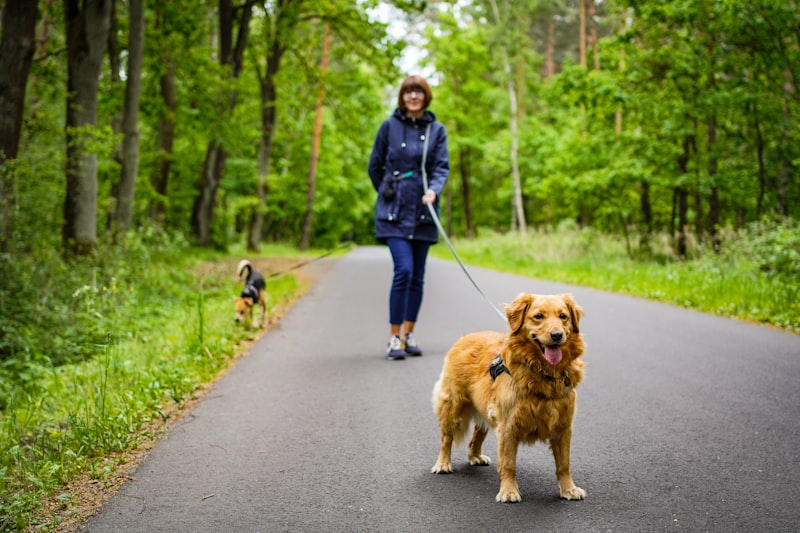
Another widely cited study came from Sweden. Researchers led by epidemiologist Tove Fall tracked more than 3.4 million adults over a 12-year period using national health and dog ownership records.
The study published in Scientific Reports found the strongest protective effects among single-person households. People living alone with dogs had lower rates of cardiovascular disease and cardiovascular death compared with people living alone without dogs.
The simplest explanation is often behavioural rather than magical. Dogs create structure.
They need feeding at predictable times. They need to be walked regardless of mood, weather or motivation. Owners often describe this as the reason they continue moving on difficult days.
The dog is not a wellness intervention. It is a daily obligation that overlaps with several healthy behaviours.
The mental health side of the equation
Research into human-animal interaction suggests the effects are not purely behavioural.
Healthdirect Australia, the Australian Government-backed health information service, notes that interaction with familiar pets may help reduce cortisol levels while increasing oxytocin, a hormone linked with bonding and calmness.
Some studies have also observed lower resting blood pressure during calm interaction with pets.
That does not mean dogs “cure” anxiety, depression or loneliness. Mental health is more complicated than that. But for many people, dogs create regular moments of movement, touch, companionship and predictability that support wellbeing over time.
In Australia, many owners describe the emotional impact in similarly practical terms. In a collection of stories published by ABC Everyday, readers described dogs helping them maintain routine and connection through illness, grief, divorce and periods of isolation.
Several readers spoke less about dramatic transformations and more about small daily habits: getting out of bed, walking outside, speaking to other people and feeling needed again.
Why dog walking changes social behaviour
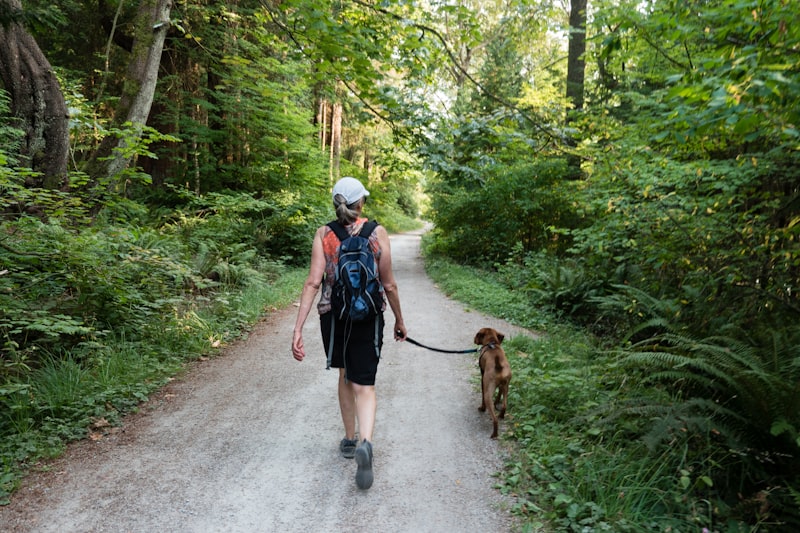
Dog walking also changes the way people interact with their neighbourhood.
In Melbourne, regulars at Princes Park often recognise each other by the dogs before they know each other's names. In Sydney, off-leash hours around Centennial Parklands create their own social rhythm each morning. Brisbane's New Farm Park has similar early-morning walking communities along the river.
These interactions are usually small. A quick greeting. A repeated conversation. A familiar face seen most mornings.
Australian researchers have observed similar patterns around neighbourhood connection and loneliness. A 2017 article published through The Conversation and republished by the ABC noted dog owners were significantly more likely to know people in their neighbourhood and engage in casual social interaction while walking.
The article cited research suggesting dog owners may be several times more likely to know local residents compared with non-dog owners.
Research on neighbourhood walkability and outdoor activity consistently shows that accessible public spaces encourage regular physical activity and social interaction. A review published in the International Journal of Environmental Research and Public Health found that neighbourhood design and walkability strongly influence recreational walking habits.
For many people, the dog becomes the social bridge that gets them out the front door in the first place.
The part social media usually leaves out
Owning a dog is also expensive, time-consuming and emotionally demanding.
Veterinary bills, housing restrictions, behavioural training, ageing pets and work schedules all shape the experience. Researchers have repeatedly noted that pet ownership does not benefit everyone equally.
The positive findings in large population studies represent averages across millions of people. They are not guarantees for individual outcomes.
For some households, adding a dog genuinely improves daily life. For others, it can create pressure that outweighs the benefits.
The RSPCA Australia recommends prospective owners consider long-term costs, exercise needs, housing suitability and veterinary care before taking on a pet. RSPCA NSW also notes that routine ownership costs can extend well beyond food and vaccinations.
If owning a dog is not realistic right now
One of the more useful takeaways from the research is that many benefits linked with dogs come from the behaviours surrounding ownership, not from the animal alone.
Daily walking. Exposure to sunlight. Familiar social contact. Consistent routine. Time outdoors.
Those things can exist without owning a pet.
If you are trying to recreate some of the “dog effect” without the responsibility of ownership, one of the simplest starting points is a recurring walking routine with other people. KeepActive lists walking groups across Australia by suburb, including casual community groups where people simply meet and walk together regularly.
That same behavioural pattern appears again and again in the research: movement becomes easier when it feels socially expected and built into everyday life.
The studies are not really telling people to rush out and buy a dog. They are pointing toward something broader. Humans tend to do better with routines that are repetitive, mildly social and physically active.
Dogs are one way people accidentally build that kind of life.
Sources
- Kramer CK et al. Dog Ownership and Survival: A Systematic Review and Meta-Analysis (2019)
- Mubanga M et al. Dog ownership and the risk of cardiovascular disease and death (2017)
- Westgarth C et al. Dog owners are more likely to meet physical activity guidelines (2019)
- Healthdirect Australia: 7 ways pets improve your health
- ABC News: Assistance dog helps Tasmanian woman return to hiking
- ABC Everyday: Stories about dogs helping people through difficult times
- ABC News: How dogs help reduce loneliness and improve neighbourhood connection
- Neighbourhood walkability and recreational walking review
- RSPCA Australia: Responsible pet ownership
- RSPCA NSW: Costs of owning a pet