
Your running shoes are soaked and muddy. Putting them through the washing machine and drying them beside a heater might seem like the quickest solution—but unless the manufacturer specifically permits it, that treatment can damage the materials, adhesives and shape of the shoe.
A better routine is simple:
- Untie your shoes before removing them.
- Brush or wipe away dirt rather than deep-cleaning unnecessarily.
- Air-dry wet shoes away from direct heat.
- Reserve each pair for the job it was bought to do.
- Track how far you have run in it.
- Replace it when grip, structure or fit has meaningfully deteriorated.
The goal is not to keep a pair alive indefinitely. It is to prevent avoidable damage and get its full useful running life.
How long do running shoes last?
You will often see a replacement range of roughly 500 to 800 kilometres, or 300 to 500 miles. Treat that range as a reminder to inspect your shoes, not as an automatic expiry date.
The American College of Sports Medicine uses approximately 350 miles, or 560 kilometres, as a general rule while acknowledging that limited research has not established an ideal lifespan for every shoe. Nike’s current guidance similarly recommends considering mileage, time and physical wear together rather than relying on one measure.
A shoe’s lifespan depends on its construction, the runner, training volume, running surface, weather and how often it is worn outside training. A lightweight racing shoe may age differently from a durable daily trainer, while walking, work and everyday errands still add wear. Brooks notes that sustained walking or work use can make cushioning and upper materials break down faster.
Research shows why one number cannot provide a definitive answer. In a Deakin University study, 12 participants ran 200 kilometres in the same shoes. The shoes initially lost up to 25 per cent of their energy-absorption effectiveness before the change plateaued, but researchers did not find a corresponding change in the runners’ gait.
A separate study followed 15 recreational runners with a rearfoot strike pattern for 640 kilometres. Heel cushioning declined by 16 to 33 per cent after 480 kilometres, yet participants did not report a significant reduction in cushioning after completing the full distance. In other words, feel is useful, but it is not a perfect odometer. Read the peer-reviewed study by Cornwall and McPoil.
Record the first run in each pair and track its distance in your running app or a note on your phone. As the total climbs, inspect the shoes more frequently. Count substantial walking and other non-running use too if you want the log to reflect the pair’s real workload.

Give expensive shoes a narrow job
One of the simplest ways to preserve a valuable pair is to stop spending its useful life on activities for which it was not bought.
Use a durable daily trainer for most easy and long runs. Keep a lighter workout shoe for faster training if your programme justifies it, and reserve a premium racing shoe for a small number of race-specific sessions and the event itself.
That does not mean keeping race shoes untouched in their box until race morning. Wear them during at least one controlled tempo or race-pace session first. This lets you confirm the fit, lacing, socks and underfoot feel without using them for every training kilometre. Nike recommends saving racing shoes for race day, short tempo sessions and race-pace training, while using regular trainers for slower and longer workouts.
Racing shoes often prioritise low weight, responsiveness and speed over everyday durability. Adidas similarly recommends using racing shoes for selected faster sessions rather than making them the default daily shoe.
The same principle applies after the run. Change into a casual or older pair before going to the shops, walking around all day or doing garden work. Use separate footwear for lifting, court sports and activities with movement demands different from running.
A simple, cost-conscious system is enough:
- Daily trainer: most ordinary, easy and long runs.
- Workout shoe: tempo sessions, intervals or faster training.
- Race shoe: a few race-specific rehearsals and race day.
- Casual or retired pair: errands and garden work, provided it remains comfortable and structurally suitable for those activities.
Price is not a reliable measure of durability. An older mechanical study found no relationship between retail price and retained shock absorption, although shoe materials have changed considerably since that research. Read the study by Cook, Kester and Brunet.
Clean only what needs cleaning
Running shoes do not need a deep clean after every outing. Let ordinary mud dry, then remove it with a soft brush. A damp cloth is usually enough for a dusty upper.
For a muddier pair:
- Remove the laces and removable insoles.
- Brush away loose dirt.
- Use cool or lukewarm water, mild soap and a soft brush.
- Follow the care instructions for the specific shoe.
- Avoid soaking the shoe unless the manufacturer permits it.
Brooks, New Balance and ASICS generally recommend gentle hand-cleaning rather than putting performance running shoes through a washing machine. See the official care instructions from Brooks, New Balance and ASICS Australia. Instructions can differ between brands and models, so check the label or product page before cleaning.
Let wet shoes dry properly
Direct heat may weaken adhesives, distort the upper or affect cushioning materials. Avoid tumble dryers, radiators, heaters and hot car boots unless the manufacturer explicitly says otherwise.
Instead:
- Loosen the laces and lift the tongue.
- Remove removable insoles so they can dry separately.
- Place everything in a ventilated room.
- Stuff the shoes loosely with plain paper or a dry cloth if they are saturated.
- Replace wet paper rather than leaving it inside.
- Use a fan to improve airflow during cold or humid weather.
Do not leave a wet pair in a closed wardrobe, car or gym bag. Allow it to dry completely before the next run.
Store valuable shoes away from heat
Do not leave running or racing shoes in a hot car boot, beside a heater or in prolonged direct sunlight. Extreme heat can affect adhesives, midsoles and the shape of the upper. Store clean, dry shoes in a cool, ventilated place and avoid stacking heavy equipment on top of them. La Sportiva provides similar storage and temperature guidance.
Match the shoe to the surface
Use each shoe on the surface for which it was designed. Unnecessary road running can wear down the pronounced lugs on a trail shoe, while rough trails can damage the lighter upper and exposed midsole of some road or racing shoes.
You do not need a cupboard full of specialist footwear. One suitable daily trainer may be enough for a runner who uses similar routes each week. The important point is that an expensive pair should not automatically cover running, work, gardening, football kickabouts and every daily errand.
Rotate for practical reasons, not a foam-recovery promise
Two pairs can be practical if you run on consecutive days, regularly encounter wet conditions or need different shoes for different surfaces and sessions.
Rotation can:
- Give a wet pair enough time to dry.
- Help you match footwear to the session.
- Make changes in comfort or performance easier to notice by comparison.
A 22-week prospective study of 264 recreational runners found a lower observed rate of running-related injury among runners who used more than one pair. Because this was an observational study, it shows an association rather than proving that rotation caused the difference.
There is limited evidence for the popular claim that every midsole requires 24 to 48 hours to rebound. A mechanical study of one shoe model found that most measured shape recovery occurred within roughly 7 to 13 hours and did not find a clear additional benefit from waiting one, two or three days. The result is too narrow to create a rule for every modern foam. Read the 2021 footwear-recovery thesis.
Two pairs also do not automatically give you twice as many kilometres from each shoe. Rotation divides your total use between them. Buy another pair when its purpose, drying time or training value justifies the upfront cost.
Protect the upper and heel
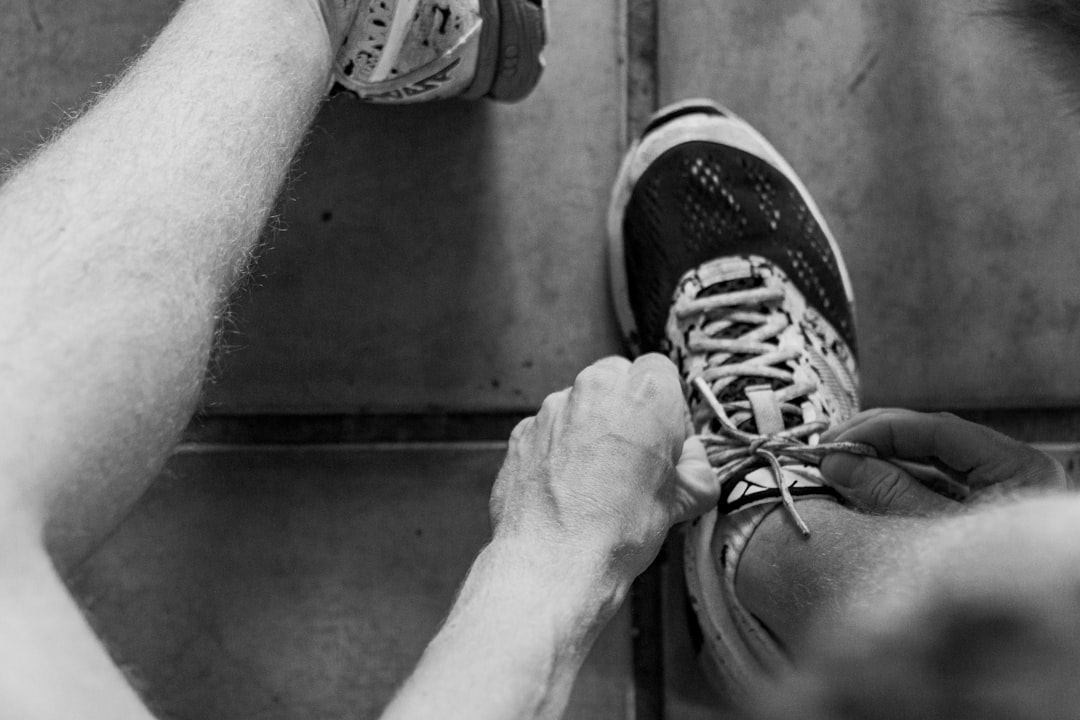
Untie the laces before putting shoes on or taking them off. Remove each shoe by hand instead of stepping on the opposite heel. Repeatedly forcing a foot through tied laces can crush the heel structure and stretch the upper.
After trail runs, clear stones and compacted mud with a brush or blunt tool rather than digging at the outsole with something sharp. Replace broken laces promptly. A shoe repairer may be able to secure a small opening in the upper before it spreads, but a repair should not disguise damage that affects how securely the shoe holds the foot.
Know when a pair is finished
Dirt, fading and cosmetic scuffs do not necessarily affect performance. Concentrate on functional changes.
Consider retiring a pair from running when:
- The outsole is worn through or no longer grips its intended surface.
- Wear is strongly uneven or exposes the softer material underneath.
- The midsole has become permanently distorted or tilted.
- The upper, heel counter or lacing system no longer holds the foot securely.
- A tear has developed in a high-stress area.
- A repeatable change in comfort remains after checking socks and lacing.
- The shoes feel noticeably less stable than a comparable pair.
A study involving 24 runners compared new shoes with the same pairs after 200 miles of road running. As cushioning capability decreased, runners changed aspects of their movement while maintaining similar measured external loads. The study does not establish a universal replacement distance, but it reinforces why appearance alone is an incomplete test. Read the peer-reviewed study by Kong, Candelaria and Smith.
New or persistent pain is not proof that your shoes are responsible. Pause or modify your running and seek advice from a qualified health professional if the problem continues.
A five-minute care routine
After a wet or dirty run:
- Untie the shoes and remove them by hand.
- Take out removable insoles and shake out loose debris.
- Brush or wipe only the dirty areas.
- Open the tongue and air-dry everything away from heat.
- Log the run against the correct pair.
Inspect the outsole, upper and heel about once a month, or more often during a heavy training block. Good shoe care will not reverse normal wear, but it can prevent avoidable damage and make important changes easier to spot.
Research and further reading
- Selecting Running Shoes — American College of Sports Medicine
- Can runners perceive changes in heel cushioning as the shoe ages?
- Running in new and worn shoes
- Shock absorption characteristics of running shoes
- Can parallel use of different running shoes decrease running-related injury risk?
- How far can your shoes run? — Deakin University
- How do road runners select their shoes? A systematic review
Disclaimer: This article provides general information and is not a substitute for individual medical advice. Consult a qualified health professional about persistent pain, injury or medical concerns.