
Disclaimer: The information in this article is general in nature and is not intended to replace professional medical advice, diagnosis or treatment. Speak with your doctor or another qualified health professional before starting a new exercise program, particularly during or after treatment for a medical condition.
Every week, Ivy Yu makes the 40-minute drive from Launceston to Deloraine to paddle on the Meander River. The 28-year-old forestry worker shares the boat with people she might never have met otherwise, including farmers, lawyers and a software engineer.
Once they push away from the bank, those differences matter less. Everyone has the same job: catch the water at the right moment and move with the crew.
That is the quiet magic of dragon boating. The social side is not something added after training; it is built into every stroke. You do not have to be the strongest or most experienced person in the boat to contribute. You simply have to learn to work with the people around you.
You cannot paddle a dragon boat by yourself
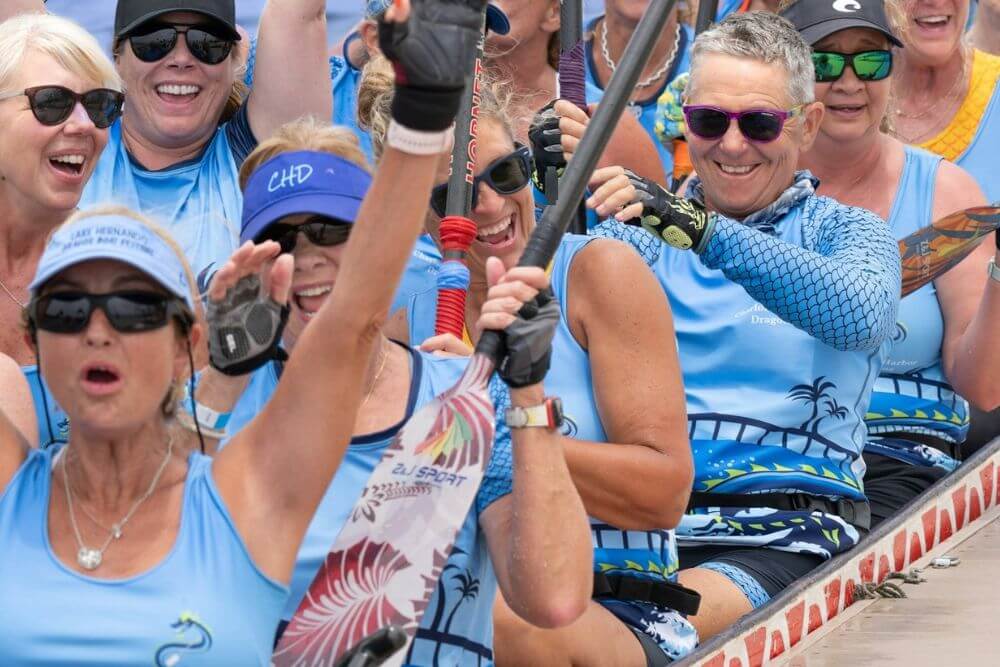
A modern dragon boat commonly carries 20 paddlers sitting in pairs, along with a drummer and steerer. One powerful paddler cannot compensate for a crew that is out of time. The boat moves best when everyone moves together.
That reliance on one another turns ordinary training into a shared project. Members learn together, load and unload the boat, help at events and notice when somebody has not shown up. Over time, familiar faces become teammates and teammates often become friends.
The sport can also be fiercely competitive. In 2025, more than 300 Australian paddlers travelled to Germany for the world championships. The squad ranged from teenagers to retirees, and 32 members trained around Canberra's Lake Burley Griffin. More than 4,000 paddlers from 34 countries were expected to compete.
Even at that level, nobody reaches the start line alone.
In dragon boating, being part of the group is not the reward for mastering the sport. It is how you learn the sport.
A small Tasmanian club with a wide mix of members
The Deloraine Flames were established in northern Tasmania in 2013. Membership has hovered at around 20 paddlers, ranging in age from their 30s to their 70s.
Club founder and former tour operator Peter Ashton also created the Deloraine Community Cup. The event brings together local crews from the chemist, a pub and the State Emergency Service, with experienced paddlers helping newcomers find their place in the boat.
It is a simple way to get people talking. Learning where to sit, how to hold a paddle and when to take a stroke gives strangers something immediate to share.
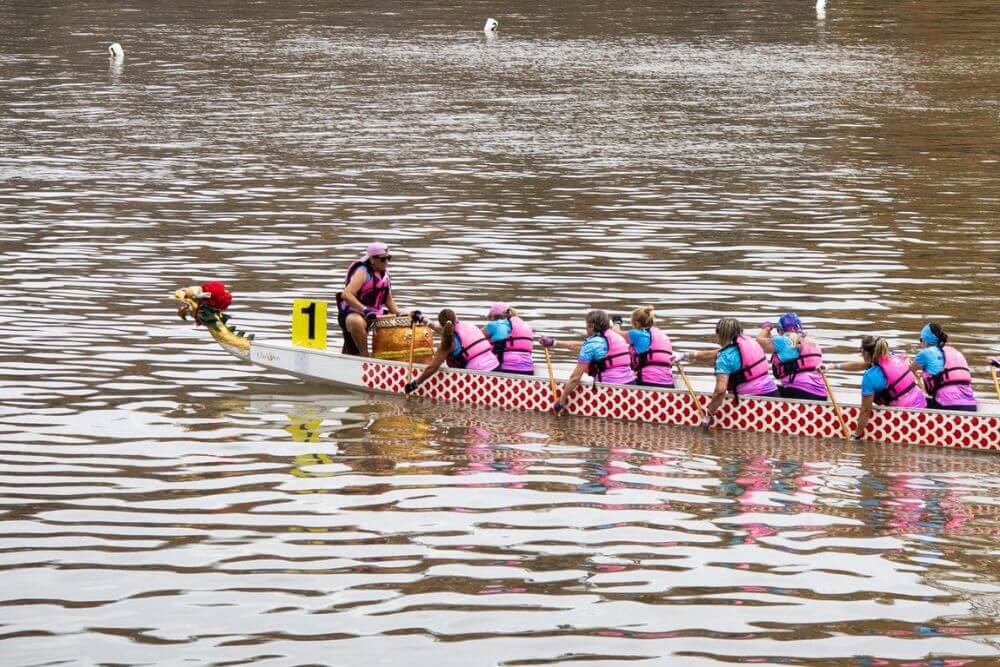
For some crews, the connection runs deeper
Breast cancer survivor teams show how a dragon boat crew can offer more than sport. Members share an experience that friends, colleagues and even family may not fully understand. On the water, they can be among people who understand without needing a long explanation.
The boat also gives them something active to do together. It is a crew, not a formal support group, and conversation can happen naturally around training, racing and packing up.
In May 2026, ABC News reported that 32-year-old Nicole Speirs had joined Dragons Abreast on Lake Burley Griffin after breast cancer treatment. She spoke about the stronger relationships that followed an experience affecting her partner, family and wider support network.
Research offers some support for these personal accounts, although it should not be overstated. A 2024 systematic review of ten studies reported positive changes in quality of life, but found that dragon boating was not clearly more effective than other forms of physical activity.
Dragon boating is not a treatment, and it will not suit every survivor. What it can offer is regular movement, a shared purpose and the company of people who understand. Anyone returning to exercise during or after treatment should speak with a qualified health professional and ask the club what its sessions involve.
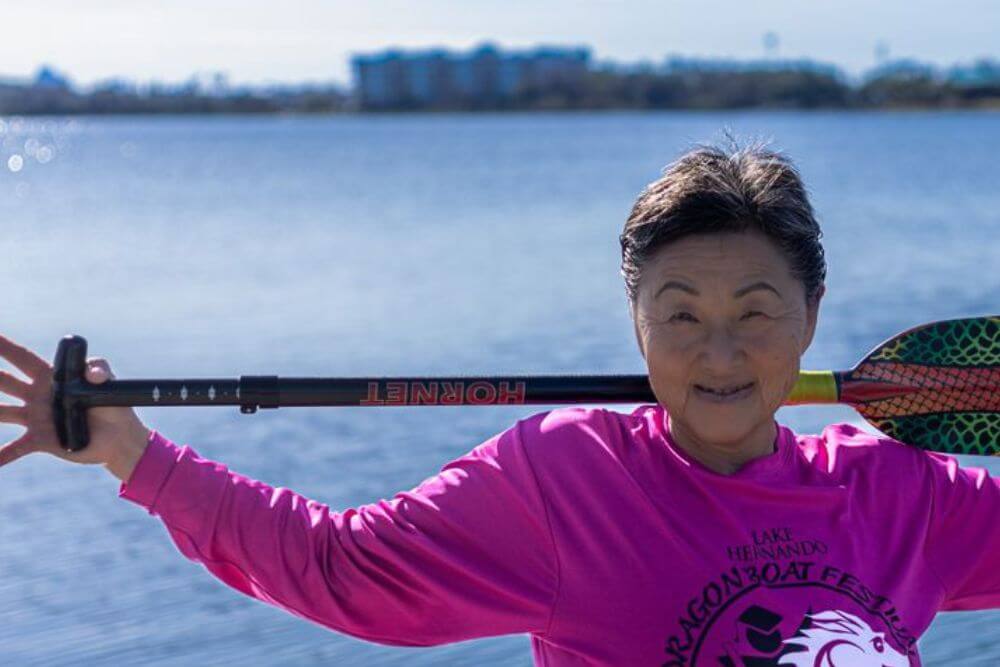
Community does not happen automatically
There is another side to relying on a crew: people have to turn up. If too many paddlers miss training, the whole session can change. Equipment, coaching and event work can also fall to the same small group of volunteers.
And like any group, a dragon boat club can have personality clashes. A study of 100 breast cancer survivor paddlers found strong feelings of trust and social support, but participants also described conflict, different levels of competitiveness and frustration over uneven commitment.
That does not make competition bad or social clubs automatically welcoming. A serious racing club can be excellent with beginners, while a casual club can still feel closed. What matters is whether expectations are clear, the workload is shared and newcomers are given a genuine way in.
The first session tells you a lot
Walking into any established group can feel awkward. Dragon boating adds an unfamiliar boat, new safety instructions and a vocabulary everyone else seems to know. A good beginner session takes away that guesswork.
Start by browsing dragon boat clubs and paddling groups on KeepActive. If travel time is likely to decide whether you keep going, compare dragon boat clubs in Melbourne or dragon boat clubs in Sydney before looking at session times and membership options.
At Rose Bay, Easts Dragon Boat Club lists Saturday introductory sessions on Sydney Harbour. The club says beginners do not need previous experience or a particular level of fitness, and that the first month is free. Check those details with the club before attending, as offers and session arrangements can change.
Beginner blocks can be especially helpful because everyone starts together. You see the same faces each week, learn at roughly the same pace and do not feel as though an established crew is waiting for you to catch up.
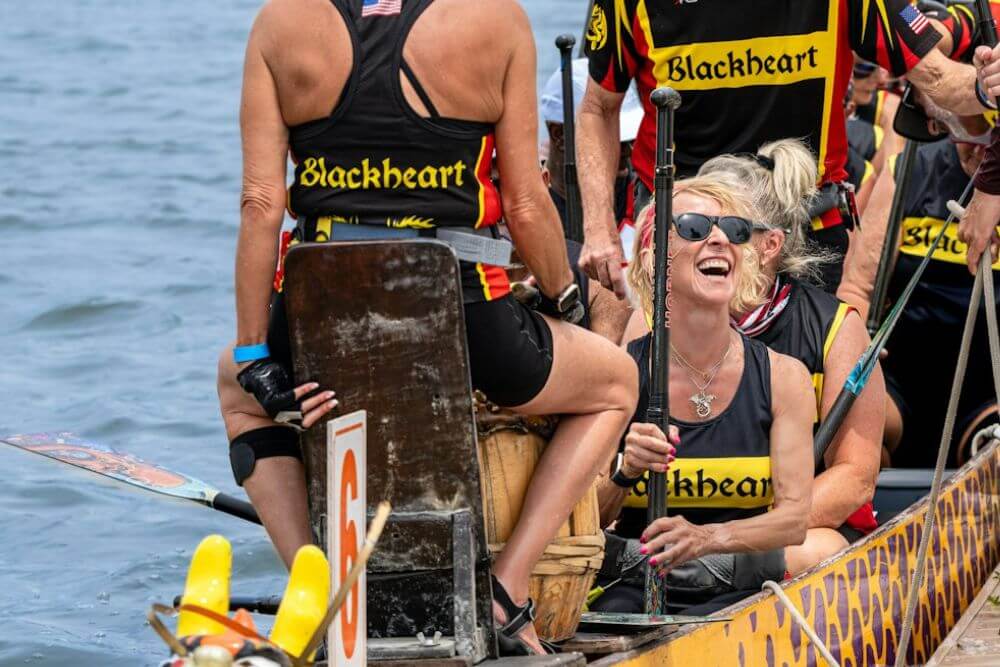
Questions worth asking before you join
The closest club will not always be the best fit. Before choosing one, ask what it expects from new paddlers and whether its calendar leans towards social sessions, racing or a mix of both.
- Is there a come-and-try session or beginner program?
- Are a paddle, lifejacket and coaching included in the trial?
- How often are members expected to train or race?
- Can members paddle socially without joining a racing crew?
- What fees, registration or insurance apply after the trial?
- Who helps new members learn the routine?
You may also feel more at home in a club built around a particular community. Breast cancer survivors can contact Dragons Abreast Sydney in Pyrmont to ask about eligibility and beginner sessions. A general club such as Easts may better suit somebody looking for mixed teams and a choice between social paddling and racing.
During a trial, pay attention to the small things. Does somebody learn your name? Are the instructions easy to follow? Does an experienced paddler explain what happens next? Are you included once the boat is back on shore, or does everyone disappear into their usual circles?
You may not know after one session whether dragon boating is your sport. You can usually tell whether you would like to spend more time with the people in the boat.
The best clubs do not promise instant friendship. They give a stranger a useful role, invite them back and make the second visit easier than the first. Dragon boating provides the shared rhythm. The people turn it into a community.