
Disclaimer: The information in this article is general in nature and is not intended to be a substitute for professional medical advice, diagnosis, or treatment. Always seek the advice of your doctor or other qualified health professional before starting any exercise programme or with any questions you may have regarding a medical condition.
Teenagers who want to start or switch sports often find one main option: a competitive club team with selection and a ladder. The Australian Sports Commission says many 15 to 17 year olds who play only now and then fear being judged and are put off by team selection. They need more beginner and social ways to play, run alongside the competitive grades clubs already offer.
- Fear of judgement, feeling behind, cost, time and a bad season all keep teenagers on the sidelines.
- Come-and-try days, social formats and teams joined with friends give them an easier way in.
- Clubs can add a few simple entry points, listed below.
How many Australian teens play sport
The Commission's youth profile uses 2019 data from AusPlay, the national survey of sport and physical activity. Fewer than one in four 15 to 17 year olds were active enough to meet Australia's physical activity guidelines. Only 5% were inactive.
The rest, about 74% or roughly 606,000 young people, took part but were active only about every second day. The Commission's list for this group starts with fear of being judged and being put off by team selection. It also includes worry about keeping up, stress, favouritism by other parents, growing time commitments and less support from parents. One bad experience is likely to put them off, because they have less confidence in their ability.
Club sport numbers start falling before the mid-teens, in soccer, netball, cricket, AFL and other sports. Our article on girls' dropout looks at the gender gap.
Why teens hold back, and what helps
Worried about being judged
Body image worries stop many young people playing. In the 2024 Butterfly Body Kind Youth Survey, 34.5% of young people said body image stopped them taking part in sport or physical activity "all the time" or "quite a bit". One in five had seen body shaming in sport in the past year, Sport Integrity Australia found.
Anxiety consultant Karen Young, speaking to the ABC about anxious children and teens generally, said: "The single worst thing for anxiety is avoidance." She suggests small steps, such as starting with 10 minutes of an activity. For sport, that could mean watching one training session before joining the next.
Parents on the sideline matter too. A 2024 Australian pilot study surveyed 67 teenagers. When parents were positive on the sidelines, young players were more likely to behave better towards teammates and opponents. An article about the study on SBS warns that common sideline comments such as "c'mon shoot" or "kick it harder" can be controlling. Ask your teenager which comments help.
Feeling behind teammates who started young
Some teammates may have played together since primary school. The Commission has also noted a trend towards early specialisation, where children focus on one sport from a young age. A newcomer may not know the rules or drills that others learnt years ago.
Starting late can still work. In 2023, ABC News reported that Darby Nichols took up rugby union at 16 and joined Newcastle's Hamilton Hawks. "I had spent so many years doing nothing, I just wanted to try something," he said. At 18, he was selected for Australia at the Deaf Rugby 7s World Cup. A club that teaches the basics gives a late starter time to learn.
Sport is no longer fun
A 2023 Victoria University survey of 5,055 women and girls in soccer and gymnastics included girls who had left. For those aged 13 to 17, the top dropout reasons were not having fun (34%) and lost interest (32%). Tied at 27% were an unfriendly coach or official, injuries and feeling too old.
Coaching makes a difference. An Australian study of 313 adolescents found positive coaching and a friendly team climate help keep them in sport.
New to the area, or no friends in the sport
Mah Te Hiko moved from New Zealand to Moranbah, a mining town in Queensland's Bowen Basin, with her family at 16. ABC News reported that the local rugby league club was where she found her feet. "When I first moved here, I started with footy and that's how I made all my connections, made all my friends," she said. Her mother, Gwen, plays too, and the pair debuted together in the club's A-grade women's side in May 2026.
Zahra Ahmadi, 17, came to Australia from Afghanistan. With help from Pushing Barriers, a not-for-profit that supports people from refugee backgrounds to play sport, she found a passion for netball, boxing, badminton and AFL. "I never thought a Muslim girl like me could be good at sports and fit in with the other girls while wearing a hijab," she said. If your teenager has no friends in a sport yet, ask whether they can bring a friend to a first session.
Cost
Federation University ran a Cost of Sport study for the Commission. It found a child's community sport competition costs an average of $4,567 a year in total. That counts travel, coaching and lost parental income. Entry-level sport cost about a quarter as much, at an average of $1,161 a year. Some clubs also repurpose equipment and uniforms to keep costs down.
Some states help with fees. In New South Wales, the Active and Creative Kids voucher gives $50 twice a year for children aged 4.5 to 18. It is for families who receive Family Tax Benefit, and must be spent with a registered provider. Queensland's Play On! vouchers are worth up to $200 for children aged 5 to 17. Links to these and other state schemes are at the end of this article.
Busy with school and work
Paid work takes time too. Almost half of working high schoolers said their job interfered with things like sport (2021 Department of Social Services report). Most working senior students do about 10 hours or less a week. A weekly social game with no fixed training may fit better than a team that trains twice a week.
Missing selection or a bad season
Missing selection or sitting on the bench can hit hard. Griffith University psychology professor Melanie Zimmer-Gembeck wrote that teenagers are hypersensitive to rejection. She advises listening first and acknowledging their feelings before talking about options.
When you do talk options, CQUniversity psychology lecturer Cassy Dittman suggests asking what your child doesn't like and what would need to change. She also suggests asking whether switching teams or dropping down a division would make a difference.

How come-and-try days help
A come-and-try day lets a teenager test a sport once, often free or at low cost, before committing to a season. A session built for newcomers can remove selection, uniforms and the worry of being the only beginner.
Some are run by peak bodies. Netball Queensland's Teen Social for 14 to 19 year olds runs for seven weeks and starts with a free come-and-try session. Teenagers can bring friends or come on their own, and there are no uniforms, ladders or finals. The current season at Brisbane's Nissan Arena costs $99, so check the next season's dates. Football West also listed a free Regional Girls Day Out in Albany for 15 May 2026. It was part of Female Football Week, a national initiative with Football Australia.
KeepActive lists come-and-try and beginner events across Australia. If a nearby club has nothing listed, ask whether your teenager can join an open training session first. One session is a start. It can make the next step less daunting.
Beginner-friendly options to try now
Start with the local club. Find three to five nearby clubs through KeepActive's activities search, and ask about social grades, beginner groups or open training. Formats vary widely, even between clubs in the same suburb. These options are also open to teenagers who are new to a sport:
- parkrun: a free 5km event on Saturday mornings where you can walk, jog or run, with no time limit. parkrun lists about 560 events in Australia.
- Run clubs: many welcome beginners; compare pace, distance and meeting times in KeepActive's running groups directory.
- Touch football: junior touch competitions for girls, boys or mixed teams cover ages 5 to 17, and adult social touch starts at 18.
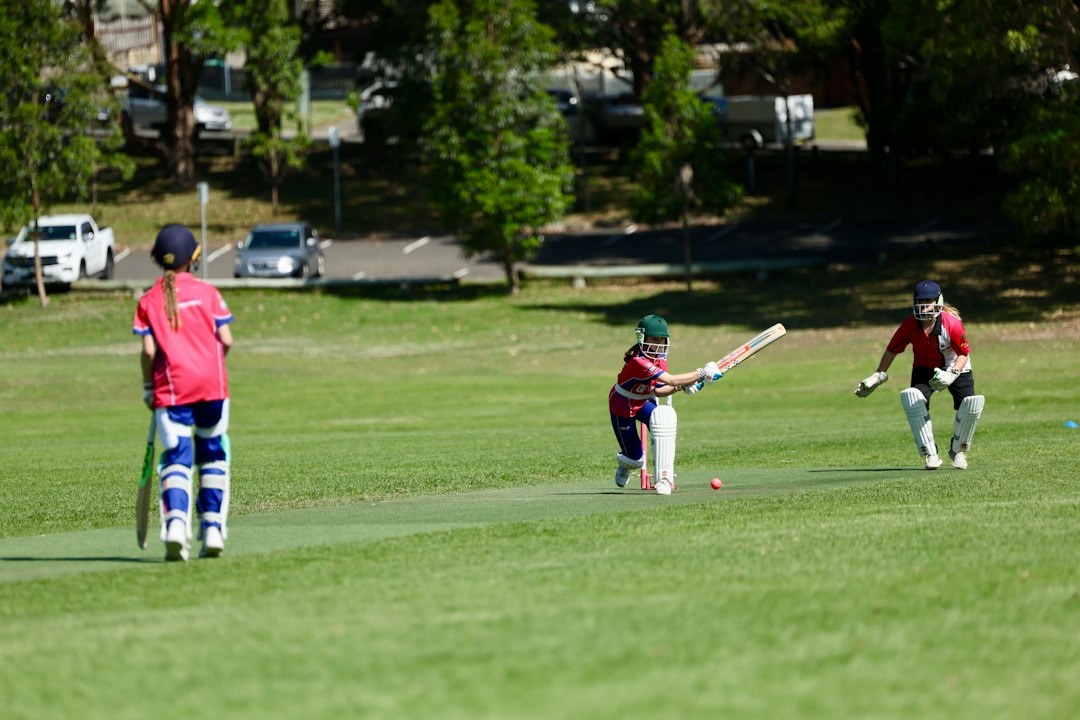
- Cricket in Western Australia: the Perth Scorchers' Women and Girls Smash Series offers social cricket for new and experienced players. Minimum ages range from 9 to 14, depending on the venue.
Competition still suits many teenagers, and some thrive on it. Our guide to a good first session covers what to ask a club.
What clubs can offer teenage beginners
Professor Rochelle Eime leads a long-running study of community sport in Victoria. In 2025 she said the sector mostly offers young people one way to play.
"Many children and youth drop out of competitive sport, but we don't generally offer different opportunities to play outside of the traditional competitive structure."
Professor Rochelle Eime, Federation University
She said teenagers who want to play with mates, build skills or avoid a long interclub season often have no option. These six changes would give them more ways in:
- Let teenagers start with friends. Active teenagers value time with friends, and the Victoria University survey found girls who stayed in sport had more support from friends.
- Run a free come-and-try session, or let new players train before any selection.
- Teach the basics, so a late starter does not have to prove they can keep up first.
- Run a social or lower grade with game time. It suits teenagers who are busy, nervous or new.
- Train coaches and remind parents to be welcoming. An unfriendly coach or official was among the top reasons teenage girls left.
- Keep entry-level costs low, for example by reusing equipment and uniforms.
In Perth, the volunteer group Team Connect goes further for schools with higher rates of disadvantage, paying for cricket uniforms, registration and transport. Its chair, Margie Oldfield, told the ABC she loves seeing kids arrive for their first game having never watched cricket.
A beginner option only helps if families can find it. Add its age range, format and start date to a free club listing, so a nervous teenager knows the session was built for new players.
Useful links
For parents
Find a sport:
- KeepActive activities directory: clubs, social groups and coaches by sport and suburb.
- KeepActive beginner events: come-and-try and beginner events across Australia. Also see free events and school holidays events.
- parkrun: find a free Saturday 5km event on the parkrun website.
Help with costs:
- NSW: Active and Creative Kids voucher, $50 twice a year for eligible families.
- Queensland: Play On! sports vouchers, up to $200 for eligible children aged 5 to 17.
- South Australia: Sports Vouchers, currently two $100 vouchers for Reception to Year 9, expanding to ages 5 to 18 from 1 January 2027.
- Western Australia: KidSport (check eligibility on the site).
Body image:
- Sport Integrity Australia's Sport is for Every BODY resources for parents.
For organisers and clubs
- Australian Sports Commission youth insights for 15 to 17 year olds.
- Play by the Rules: the 7 Pillars of Inclusion framework for clubs, developed with the Australian Sports Commission.
- Sport Integrity Australia: Every BODY resources for coaches and sport administrators.
- Australian Sports Commission grants page, which lists current funding such as Sporting Schools grants for schools.