

Disclaimer: The information in this article is general in nature and is not intended to be a substitute for professional medical advice, diagnosis, or treatment. Always seek the advice of your doctor or other qualified health professional before starting any exercise programme or with any questions you may have regarding a medical condition.
You're sitting in a consulting room, and the word has just landed: prostate cancer. For a lot of men, the next instinct is to slow down. Rest. Protect the body, conserve energy, wait and see what the treatment does.
A study published in late June 2026 suggests that instinct, understandable as it is, may be the wrong one.
The instinct is to rest. The research says move.
Researcher Pauline Benker and her co-authors pooled the long-term data from dozens of earlier studies that tracked men after a prostate cancer diagnosis. The men who stayed physically active had a markedly lower risk of dying early than those who did little, cutting their risk of death from any cause by close to a third.
This matters in Australia more than almost anywhere. Prostate cancer is the most commonly diagnosed cancer in Australia, and survival is high. Around nine in ten men are still alive five years after diagnosis. That is a large group of men living for years, sometimes decades, with the same quiet question: what now?
The instinct after a diagnosis is to rest. The evidence points the other way.

What the latest numbers actually show
The June 2026 review compared men by how much they moved after diagnosis. The more active group had about a 31% lower risk of dying from any cause than the least active. Death specifically from prostate cancer was lower too.
The effect was strongest for the men who pushed a little harder. Those getting regular moderate-to-vigorous activity, the kind that leaves you slightly puffed, saw their risk of early death fall by closer to 38%.
A fair word of caution. These are associations, not proof that exercise alone caused the difference, and active men can differ in other ways. But the pattern holds across study after study, and it all points one direction.
How much movement are we actually talking about?
Less than you might fear. The benefit showed up at around 7.5 MET-hours of activity a week. In plain terms, that is roughly 150 minutes of moderate movement: a brisk half-hour walk, five days a week.
You don't need a gym membership or a personal trainer to reach that. A daily walk around the block, a ride to the shops, the lawn, and a couple of longer walks on the weekend will get most men there.
And it isn't all-or-nothing. Ten minutes after each meal counts. So does parking at the far end of the car park. The research rewarded more movement, but it didn't punish starting small. For most men coming off surgery, small is exactly where you start.
Why walking is the easiest place to start
For a man recovering from surgery, or managing the fatigue that comes with hormone therapy, walking is forgiving. It's free, it needs no equipment, and you set the pace your body allows that morning.
It is also social, and that part matters as much as the steps. A standing arrangement to meet someone gets you out the door on the days you would rather not. Start with walking groups listed near you, which you can filter by suburb and distance. Free Saturday-morning parkrun events run in hundreds of locations and tend to draw plenty of older blokes who just want a reason to be somewhere at 8am. There's a reason walking keeps turning up as a lifesaving habit for older adults.
Strength work has its own job to do
Walking is the foundation, not the whole picture. Some prostate cancer treatments, hormone therapy in particular, strip muscle and thin the bones. Resistance training, whether that's weights, bands, or bodyweight, is what pushes back against that.
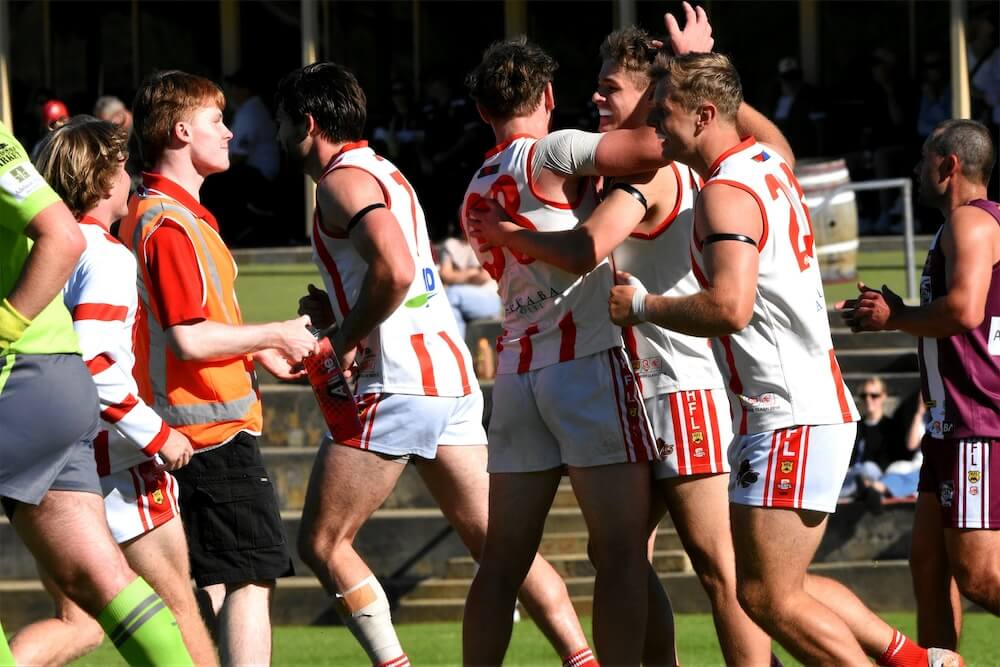
This is where doing it properly counts. An accredited exercise physiologist can build a programme around your treatment and your starting point, and your GP can advise whether a care plan helps with the cost. In Perth, the volunteer-run PROST! programme runs group sessions for men with prostate cancer at local football clubs, organised around three words its members keep returning to: muscle, mateship and mood. Exercise oncology is a field Australian researchers helped build, much of it out of Edith Cowan University in Western Australia.

Where to take the first step
The hardest part is rarely the exercise. It's the first session, walking into a room where you don't know anyone, on a week when your body already feels like it has enough going on.
If a gym feels like the wrong room, lower-key activities for older adults and local Men's Sheds give you the same company without the mirrors. The research connecting cancer survival with muscle strength and fitness keeps growing, and the dose that helps is genuinely small.
So pick the thing you'll actually do this week. A half-hour walk most days clears the bar the study set. Tell your doctor you've started. Then keep showing up.