

Disclaimer: This article provides general information, not individual medical advice. Speak with a qualified health professional about exercise and any medical condition.
Can you safely run in the rain?
Often, yes—but only when it is ordinary rain, not a thunderstorm or flood situation. At 6:20 on a weekday morning, light rain on the window does not automatically cancel your five-kilometre loop. It does mean checking whether you can still see the route, trust the surface, cross roads safely and reach solid shelter without improvising.
My rule is simple: light rain may suit a shorter, easier run; thunder, lightning, floodwater or poor visibility means no run. One missed session matters far less than forcing a route that you can no longer judge.
Check the forecast and current Bureau of Meteorology warnings for your location before leaving. Do not rely on the absence of a severe thunderstorm warning alone: the Bureau says all thunderstorms produce lightning, while warnings are issued only for storms expected to meet severe or very dangerous criteria.
A quick go/no-go check
- Go, but adjust: light or steady rain, no thunder or lightning, no relevant weather or flood warning, good sightlines and a familiar route with easy exits.
- Postpone: thunder, visible lightning, hail, damaging wind, floodwater, a closed path, darkness or rain heavy enough to hide traffic, debris or the ground ahead.
- Turn back: conditions worsen, water begins covering the route, branches or debris appear, or you cannot tell whether a driver has seen you.
A wet run should never become a test of how much uncertainty you can ignore.

If you hear thunder, get into proper shelter
Thunder ends the session. The Bureau advises anyone caught outdoors in a thunderstorm to move immediately to a solid building or hard-top vehicle. A gazebo, picnic shelter, fabric tent or tree is not safe lightning shelter. There is no safe place outdoors during a thunderstorm.
If thunder starts while you are running, take the shortest safe route to proper shelter rather than completing the loop. Avoid open ovals, ridges, waterfronts, isolated trees, metal structures, creeks and stormwater drains. If a hard-top vehicle is closer than a building, get inside and close the windows.
Never walk or run through floodwater. The Bureau warns against travelling through it, and Victoria State Emergency Service says never to enter floodwater. Water can hide a damaged path, drain or current; turn around rather than testing its depth.
Choose a familiar route with quick exits
A wet day is a poor time to explore an isolated trail or commit to a long out-and-back. Choose a familiar loop near home, shops, a station or another solid building. Repeating a short loop gives you more opportunities to stop if rain intensifies.
Remove low-lying creek paths, underpasses and sections that regularly collect water. Familiarity is useful, but it does not prove that today's route is clear: heavy rain can leave mud, leaves, gravel, fallen branches and standing water where yesterday's path was dry.
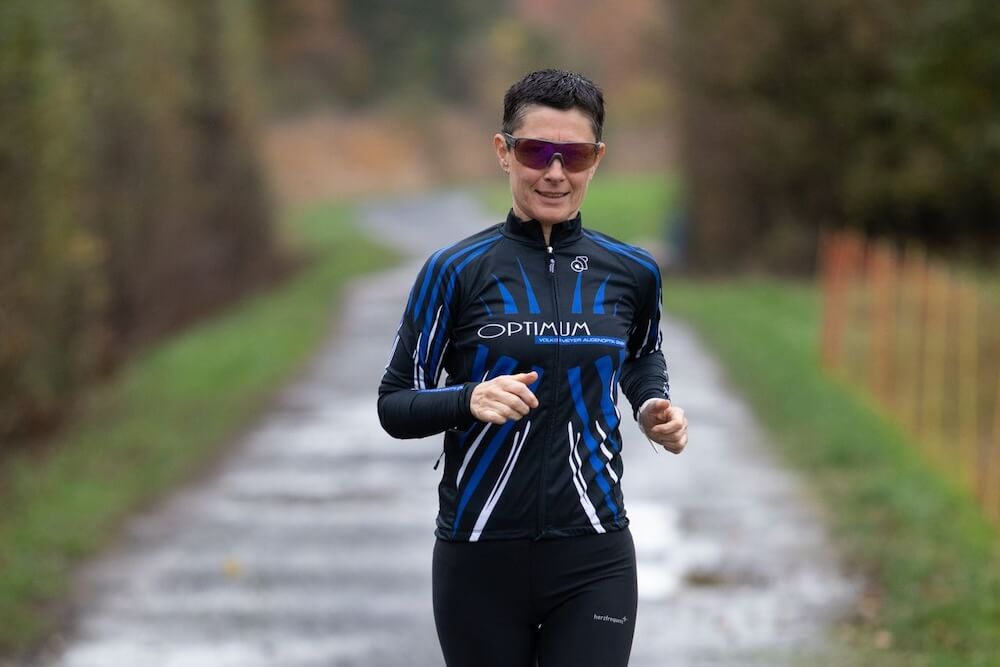
Scan several metres ahead instead of watching your pace display. Step around water when you cannot see the bottom. If you cannot see the surface well enough to place your feet confidently, walk back or end the run.
Slow down before slippery sections
The Victorian Government's running injury-prevention guidance recommends a conversational starting pace and a clear, smooth and even surface. In rain, apply that advice before the risky section: shorten your stride, ease off before corners and descents, and walk when the next foot placement is uncertain.
Wet leaves, mud, painted road markings, metal covers, timber decking and smooth tiles can be more slippery than the surrounding path. Avoid sharp turns and sudden braking on them. A pace target or personal best can wait for predictable footing.
Inspect the outsole before leaving. Use another pair if broad areas of the heel or forefoot are worn smooth, or if the upper, heel counter or laces no longer hold the foot securely. Laboratory research on slip-resistant work shoes found that traction declined as wear created a larger tread-free area. That study did not test running shoes on wet roads, so it supports checking wear—not a universal tread-depth rule or a guarantee of grip.
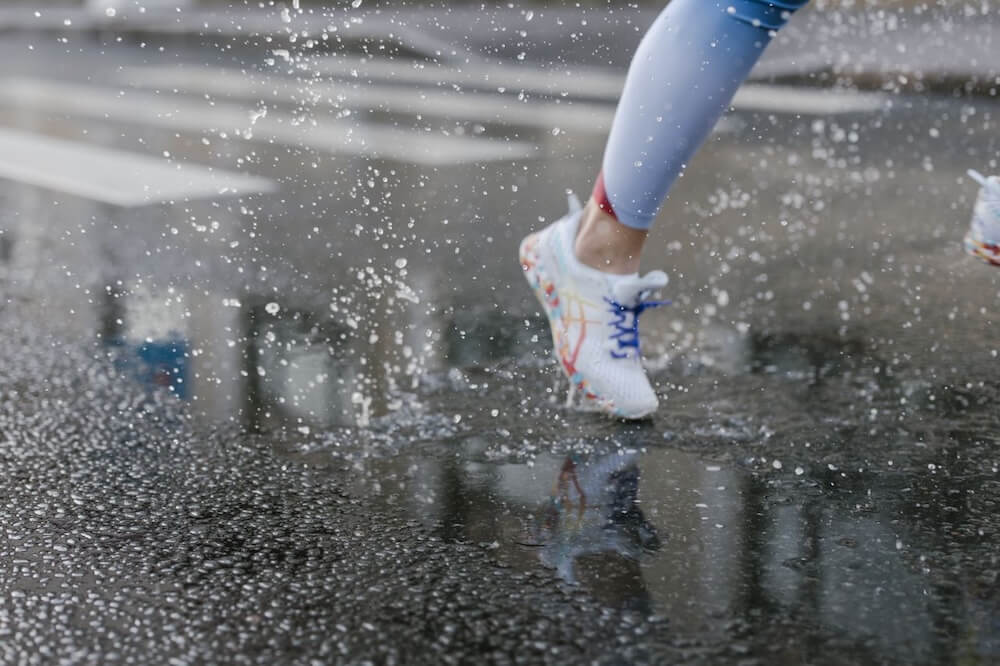
Waterproof shoes are optional, not a safety requirement for a short paved run. Fit, secure lacing and an outsole suited to the actual surface matter more. Trail shoes may help on soft ground but are not automatically better on wet pavement. Test any shoe, sock or jacket in training rather than for the first time at an event.
Make yourself visible without assuming you have been seen
Rain and low cloud can reduce contrast even during the day. Wear a bright outer layer; add reflective details in low light. Prefer signal-controlled crossings or places with long, open sightlines, and wait for vehicles to stop or for the crossing signal. Eye contact alone does not confirm that a driver has seen you.
Keep audio off when traffic, bikes or poor visibility demand your attention. On shared paths, leave passing room and warn people before overtaking. ABC's interviews with runners and an Achilles Melbourne guide highlight how space, awareness and a clear verbal warning can help other path users feel safe. If the path is too narrow to pass without pushing someone towards the road or verge, slow down and wait.
Dress for temperature and wind, not perfect dryness
Choose a light, breathable outer layer when rain and wind make you cold, with a sweat-wicking layer next to the skin. A brimmed cap can keep water out of your eyes. Avoid heavy layers that become awkward when soaked, and protect your phone and keys in a sealed pocket or waterproof pouch.
Choose socks that sit flat and deal with known rub points before leaving. If a wet seam, sock or shoe starts rubbing, shorten the route. After the run, change into dry clothes, remove the insoles and let shoes air-dry away from direct heat.
Being wet increases vulnerability to cold. Healthdirect's hypothermia guidance lists uncontrollable shivering, weakness, clumsiness, confusion and drowsiness among warning signs. Stop, move somewhere warm and dry, and change out of wet clothing. Suspected hypothermia is a medical emergency: call Triple Zero (000).
The final decision takes ten seconds
Ask four questions: Can I see the route? Can I trust the surface? Can I cross safely? Can I reach a solid building or hard-top vehicle without improvising? If all four answers are yes, there is no thunder or lightning, and no warning or floodwater affects the route, choose a short familiar loop and keep the effort easy. If any answer is no, postpone, train indoors or take the rest day.
For ideas beyond running, KeepActive's guide to staying active during cold and rainy winter days offers practical indoor and outdoor options.