
What Is the Push-Up Challenge?
Every June, tens of thousands of Australians commit to a simple deal: do a set number of push-ups each day for 24 days, and in return, learn something about mental health they probably didn't know. The Push-Up Challenge pairs a physical goal with daily mental health facts delivered through its app, turning a bodyweight exercise into a conversation starter about depression, anxiety, and suicide prevention.
The 2026 challenge runs from June 3 to 26. This year's target is 3,307 push-ups — one for every Australian life lost to suicide in 2024. It's free to join, open to individuals and teams, and you don't actually need to do push-ups. Sit-ups, squats, or half-reps all count. The point isn't elite fitness. It's showing up.
What makes this different from most fitness challenges is that a University of Melbourne study has now measured whether it actually works — not just for fitness, but for mental health outcomes. The results, published in the Journal of Prevention in 2026, tracked over 42,000 participants across three timepoints. And for a free, self-directed challenge, the findings are worth paying attention to.
The Research: What a Push-Up Challenge Actually Does for Mental Health
Researchers at the University of Melbourne surveyed 29,069 participants before the challenge, then followed up at two weeks and three months after the event. They measured depression and anxiety symptoms, wellbeing, resilience, help-seeking behaviour, and self-care habits.
At three months, the overall population showed small but statistically significant reductions in both depression and anxiety symptoms. Wellbeing scores improved modestly too. On their own, those numbers might not sound dramatic — but they came from a free, 24-day event with no clinical supervision. Most mental health interventions struggle to reach people at all, let alone show measurable change.
The standout finding was in behaviour change. Participants were twice as likely to seek help for a mental health problem after the challenge, and nearly four times more likely to adopt self-care strategies like mindfulness, journaling, or setting boundaries. For an exercise event, shifting attitudes towards help-seeking is a significant result.
Bigger Effects for Those Who Need It Most
Here's where the data gets more interesting. When researchers looked specifically at participants who started the challenge with clinical-level depression or anxiety symptoms, the effects were substantially larger. Depression scores dropped with a large effect size, and anxiety showed a similar pattern.
This matters because people experiencing symptoms of depression or anxiety often struggle to start exercising at all. The Push-Up Challenge lowers the bar — it's done at home, it's free, and the daily targets are small enough to manage even on a rough day. The mental health content arrives passively through the app, which means participants absorb information about warning signs, support services, and coping strategies without having to actively seek it out.
It's not therapy. But for someone who wouldn't otherwise engage with mental health support, it's an entry point.
Why It Reaches Men — and Why That's Unusual
Nearly two-thirds of the study's participants were male, with an average age of 35. That demographic is consistently the hardest to reach with mental health messaging. Men aged 30 to 50 account for some of the highest rates of psychological distress in Australia, yet they're the least likely to seek help, talk to a GP, or engage with awareness campaigns.
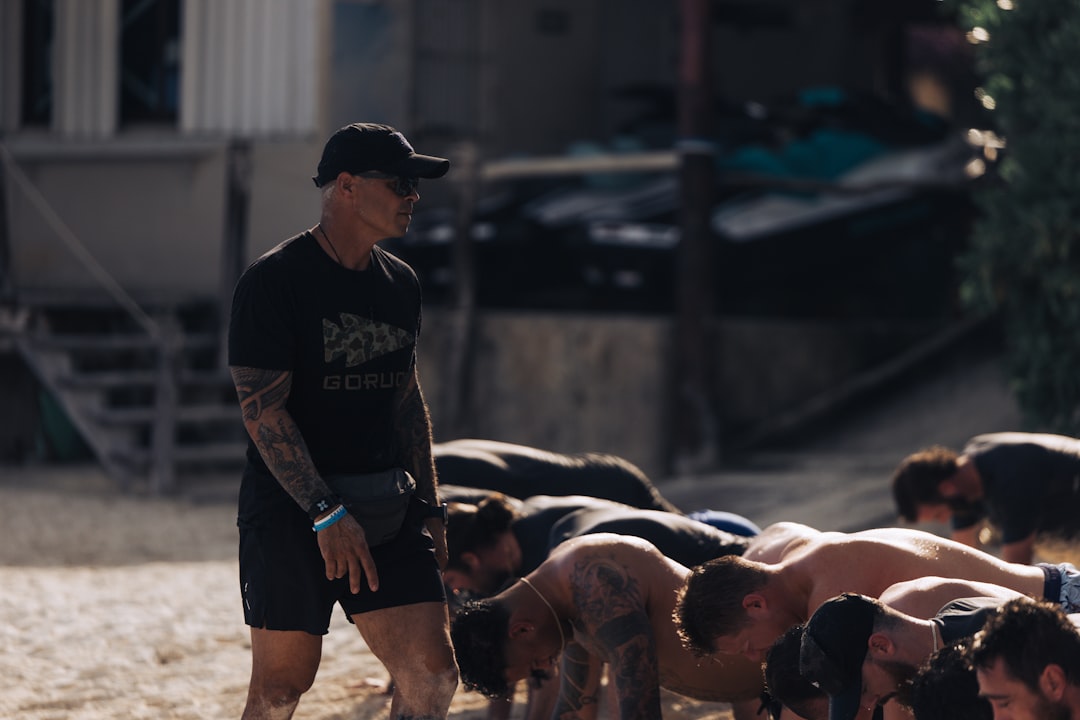
The Push-Up Challenge sidesteps this by leading with exercise, not emotions. The mental health component is embedded, not front-and-centre. A bloke signing up to smash out push-ups with his mates or workmates doesn't need to frame it as a mental health activity — but the daily facts and team conversations mean it becomes one anyway.
Workplaces have caught on. Many Australian companies now run the Push-Up Challenge as a team activity, giving employees a shared physical goal that opens the door to conversations about stress, burnout, and support — conversations that might not happen in a formal EAP session.

How the Challenge Works in Practice
Registration is free through the Push-Up Challenge website. You can join solo or create a team — workplaces, sporting clubs, gyms, schools, and friend groups all participate. The app assigns daily push-up targets and delivers a mental health fact each day, building knowledge progressively over the 24 days.
If push-ups aren't your thing, you can substitute other exercises. Squats, sit-ups, or modified movements all count. You can also choose to complete half the daily target. The organisers are clear that the number matters less than the consistency.
The 2026 event is partnered with headspace, Australia's national youth mental health foundation. Past events have seen participants self-report overwhelmingly positive outcomes — 99% said they felt fitter and stronger, and 96% said their mood improved during the challenge.
Pairing Exercise with Purpose
The research supports something that regular exercisers already know intuitively: having a reason beyond fitness makes it easier to stick with a routine. Training for a charity run, joining a walking group, or committing to a team challenge adds accountability and meaning that a solo gym session doesn't always provide.
The Push-Up Challenge works because it stacks multiple motivators. There's a concrete daily target. There's a team or community element. There's a cause larger than personal fitness. And there's a defined endpoint — 24 days is long enough to build a habit but short enough to feel achievable.
If you've been looking for a reason to get moving this winter, or if you want a fitness challenge to do with a friend, the June timing works well. It's a low-commitment way to build upper body strength while learning something genuinely useful about mental health.

What the Study Didn't Show
Transparency matters, so it's worth noting the limitations. The study had no control group, which means researchers can't definitively say the challenge caused the improvements — only that participants improved over the period. There was also significant dropout between survey waves, with only about 15% completing all three surveys.
Physical activity gains observed at two weeks didn't hold at three months, suggesting the challenge boosts exercise during the event but doesn't necessarily create lasting fitness habits on its own. And social connection scores didn't change significantly, despite the team-based structure.
None of this undermines the core finding: a free, accessible challenge can meaningfully shift attitudes towards mental health help-seeking, especially among men and people already experiencing symptoms. That's a practical result, even if the effect sizes are modest at a population level.
Getting Involved in 2026
The 2026 Push-Up Challenge runs June 3 to 26. Registration is open now at thepushupchallenge.com.au. If you're part of a fitness group, sporting club, or workplace, it's worth raising as a team activity — shared goals tend to keep people accountable, and the daily mental health facts give teams something real to talk about.
If push-ups aren't accessible for you, the challenge accepts alternative exercises, and you can set your own pace. The goal is 3,307 across 24 days, but finishing is less important than starting. And if the research is any guide, you might come out the other side a little fitter, a little more informed about mental health, and more willing to have the conversations that matter.