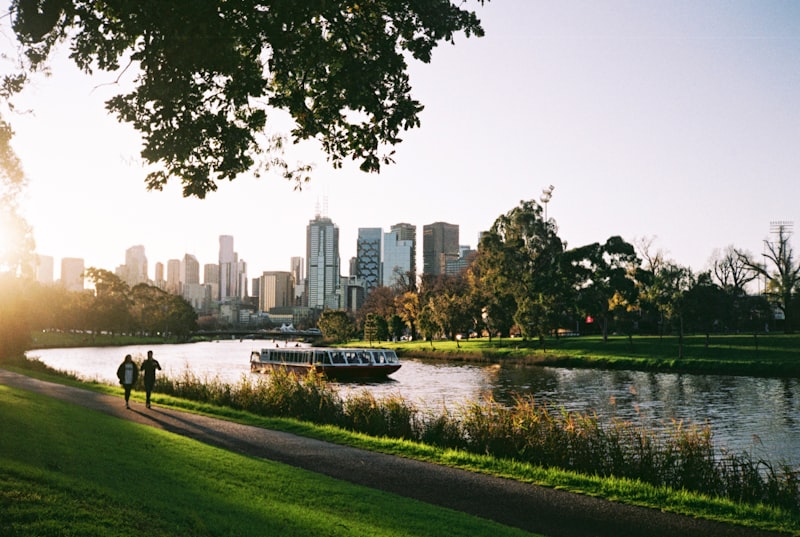

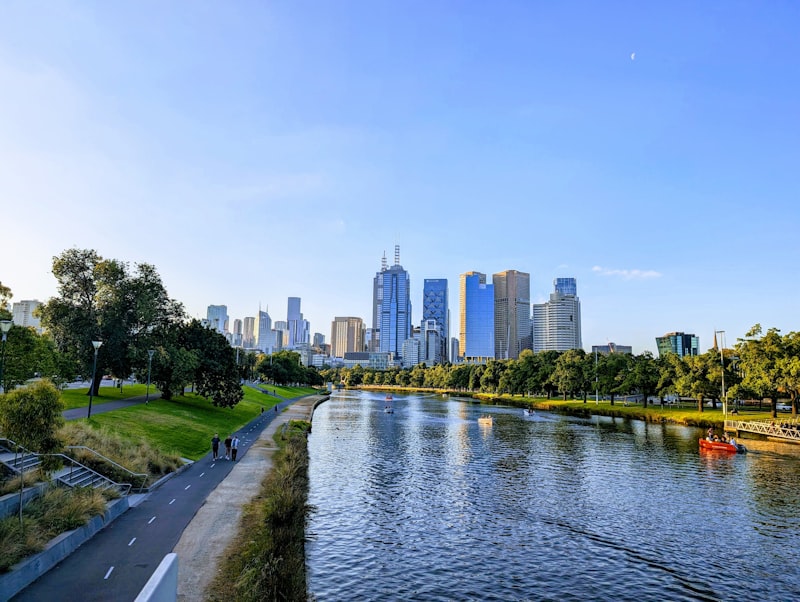
At Alexandra Gardens, Melbourne’s towers are still visible behind the trees. By Dights Falls, the river is edged by rock, bushland and the remains of early industry. Keep going through Banyule to Westerfolds Park and the city can feel much farther away than it really is.
That change of scenery is the Main Yarra Trail’s biggest appeal. Parks Victoria describes the 33 km trail as popular with runners, walkers and cyclists, but you do not need to cover the full route to enjoy it.
The awkward part is planning. Maps and signs use different start and finish points, so the distances do not always agree. This guide uses the 33 km Parks Victoria route and breaks it into four sections that are easier to understand.
Main Yarra Trail at a glance
- Route used in this guide: the Southbank city approach to Westerfolds Park.
- Total distance used in this guide: 33 km.
- Path users: walkers, runners and cyclists sharing the route.
- Best first visit: one section rather than the full trail.
- Best stop for toilets and water: Yarra Flats.
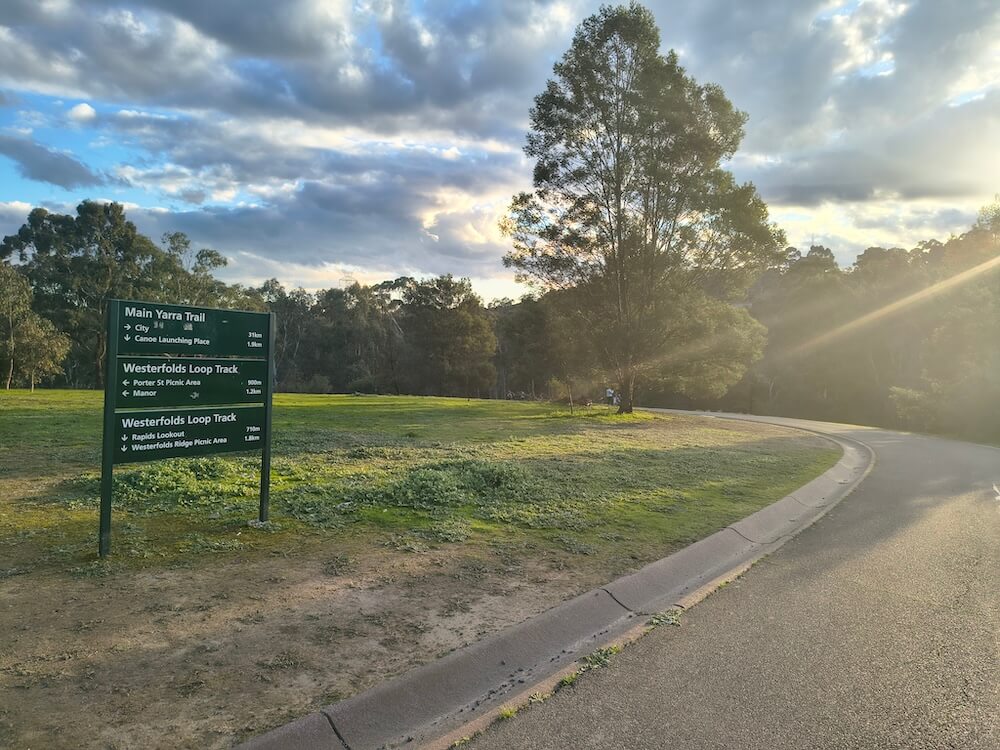
Use 33 km to plan your day, but do not expect every watch or bike computer to show exactly the same number. A sign inside Westerfolds points 31 km to “City” from that spot, while some routes begin or end farther along the river.
There is an older definition too. A 2008 Yarra Valley Parklands management plan describes an 18 km section from Burke Road in Ivanhoe to where Mullum Mullum Creek meets the Yarra in Templestowe. It is not the same route used in this guide.
The trail in four sections
These are planning sections based on major landmarks, not official stages. Your distance will vary slightly depending on the exact place you start, stop or turn around.
1. Southbank to Dights Falls
Southbank is a convenient place to begin, although there is no official starting marker. Pick a clear meeting point and save it on your map. Alexandra Gardens works well because its paths, lawns and city views are easy to recognise.
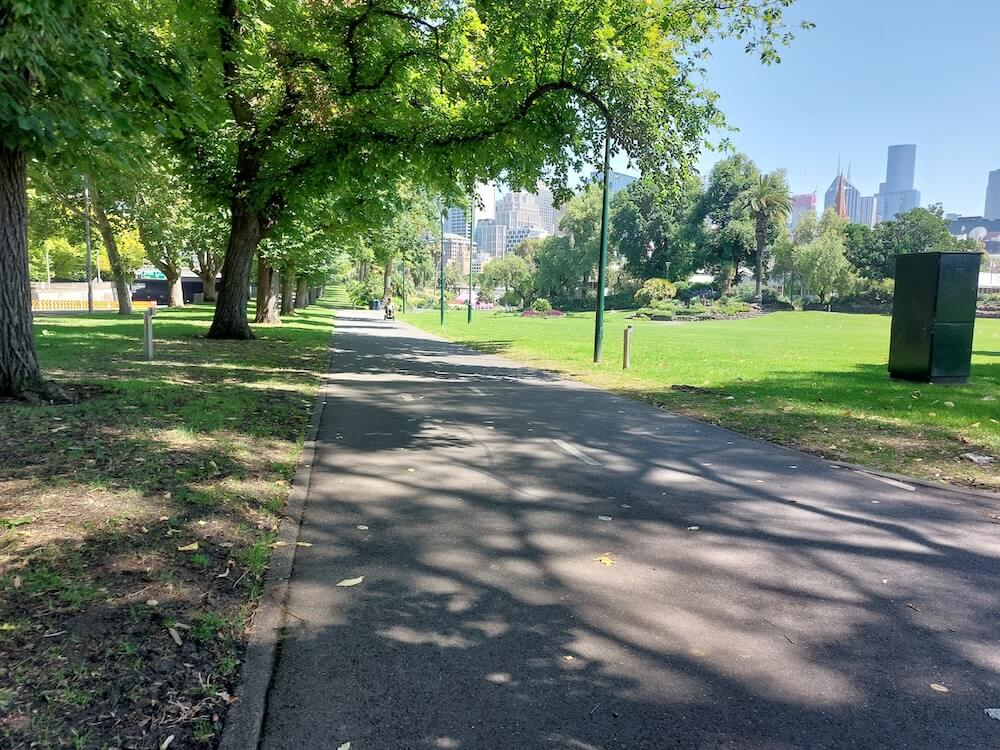
This is the busiest part of the trail. Walkers and runners can choose a distance and turn back whenever they like. Dights Falls in Abbotsford is the first major landmark.
2. Dights Falls to Yarra Flats via Yarra Bend
The bridge over Merri Creek is the junction to watch. Cross it for Dights Falls; from the meeting point of Merri Creek and the Yarra River, the Main Yarra Trail continues beneath the freeway towards Yarra Bend. Follow the creek instead and you have joined the Merri Creek Trail.
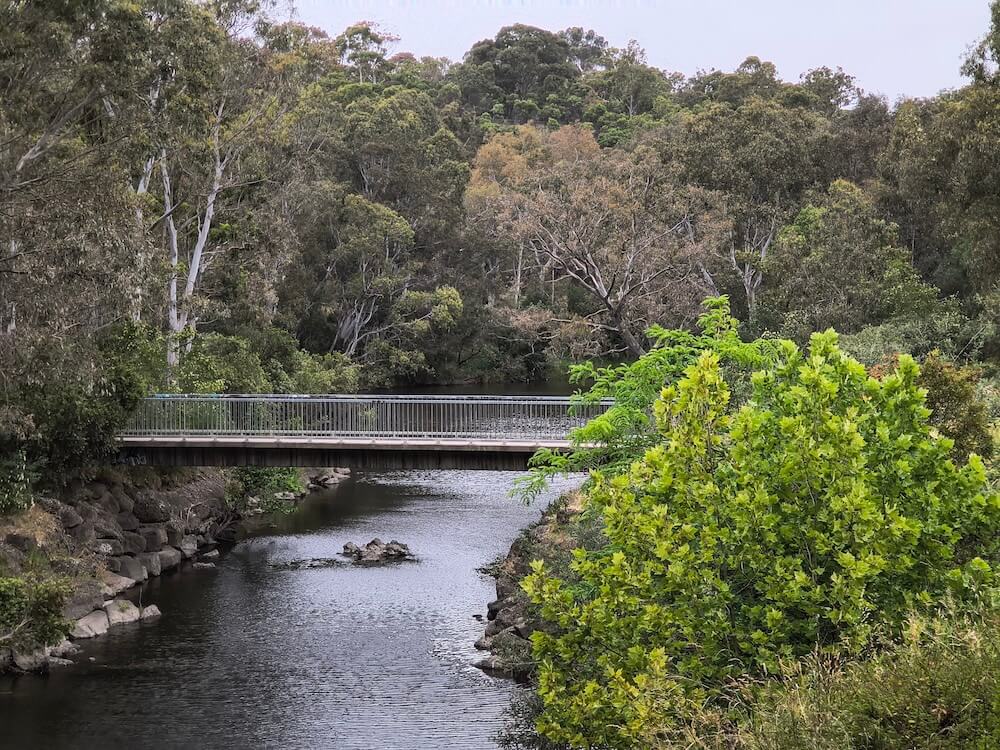
Beyond the freeway, the trail continues through Yarra Bend Park before heading east towards Yarra Flats. Buildings start to give way to bushland and river views. There are several side paths, so check the signs at each junction.
3. Yarra Flats to Banyule
The Main Yarra Trail runs the length of Yarra Flats. From there, it continues through Viewbank towards Banyule Flats, with wetlands close to the route.
4. Banyule to Westerfolds Park
Westerfolds Park in Templestowe is the finish used in this guide. Its broad lawns, river views and sealed paths feel very different from the narrower sections before it.
Parks worth visiting along the way
Several large parks sit beside the trail, and each offers a different reason to stop. Yarra Bend, Yarra Flats and Westerfolds are on the route. The Royal Botanic Gardens is close to the city start, but you will need to leave the trail for a short detour.
Alexandra Gardens: a handy place to start
Alexandra Gardens is a practical meeting place for a trip towards Westerfolds. Its open lawns, clear paths and city views make it easy for a group to meet up. It also works well if you only want a short walk or run.
Royal Botanic Gardens: a short detour
The Royal Botanic Gardens is near the city end of the route, but it is not on the Main Yarra Trail itself. The 38-hectare Melbourne Gardens contains more than 8,500 plant species. It is better suited to a slower day when you have time to look around.
Leave the riverside route near Alexandra Gardens and allow enough time to return to it. Cyclists should also know that riding bicycles and e-scooters inside Melbourne Gardens is not permitted; bicycle parking is available near Observatory Gate.
Yarra Bend Park: bushland close to the city
By Yarra Bend, there are fewer buildings and much more bushland. Parks Victoria calls it Melbourne’s largest natural bushland park. Dights Falls, steep riverbanks and woodland make it a good choice if you want scenery and history without travelling to the outer end of the trail.
Yarra Flats: the best place for a break
Yarra Flats is the easiest place to plan a proper break. Parks Victoria lists toilets, drinking water, shade, shelter and picnic tables, although there are no bins. The park also has billabongs and old River Red Gums, so it is worth allowing time to look around.
Westerfolds Park: finish here or add the loop
You can finish at Westerfolds or keep going within the park. The 120-hectare park has six kilometres of sealed paths and a 4.8 km loop track, as well as picnic areas and river views. If you add the loop, count it as extra distance rather than part of the 33 km trail.
History along the trail
Several stops tell the story of the river and the land around it. Look out for Dights Falls, the mural under Chandler Highway and the wetlands around Banyule.
Dights Falls and the Ceres Mill
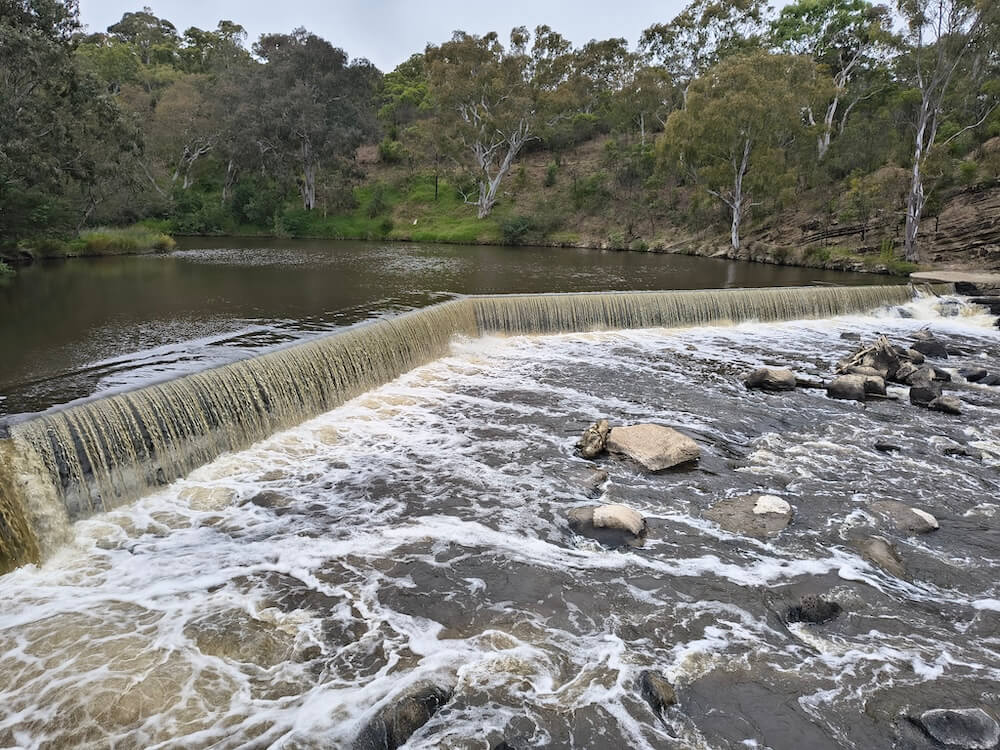
Dights Falls is an artificial weir built across a natural rock bar, not a natural waterfall. John Dight, a millwright and engineer, built the Ceres Mill with his brother. An official heritage study says the mill was completed in August 1841, and the weir supplied water to it.
The mural under Chandler Highway
Under the Chandler Highway bridge, a 60-metre mural by Ash Firebrace and Tom Civil tells the Wurundjeri story, as told by Barak, of how the Yarra River was formed. It was created in consultation with Aboriginal elders. Check that the underpass is open before going out of your way to see it.
Wurundjeri Country and the river wetlands
Yarra Bend and the Yarra Valley Parklands are on Wurundjeri Country. Parks Victoria also records that Yarra Flats remained an important gathering place for Wurundjeri people into the 1950s. Read local signs, stay on marked paths and keep away from sensitive riverbank areas.
Other trails you can join
The Merri Creek Trail is the most obvious inner-city branch because its junction sits beside Dights Falls. Farther east, the network includes the Koonung Creek, Ruffey Creek, Green Gully, Plenty River, Diamond Creek and Mullum Mullum Creek trails.
These trails are useful for making a loop or leaving the route early, but they also make it easier to take a wrong turn. Check the name on the next sign before following a path away from the river.
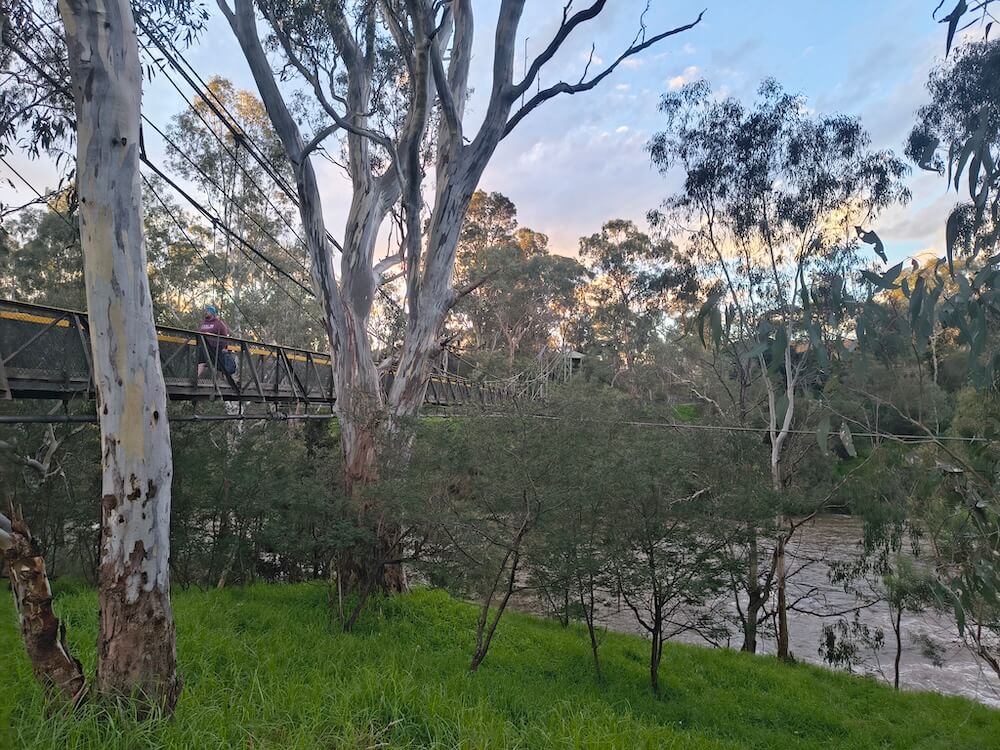
Near Finns Reserve, a narrow suspension bridge crosses the Yarra towards the Ruffey Creek Trail. There is little room to pass, so slow down and make space for people coming the other way.
Choose a section for your walk, run or ride
If you are walking
Most walkers will get more from a single section than from attempting the entire trail. Dights Falls works well as the destination for a shorter historical walk, while a park-based out-and-back lets you choose your own distance.
If you prefer company, walking groups around Melbourne offer another way to explore local trails. Check the group’s meeting point because it may use only part of the Main Yarra Trail.
If you are running
An out-and-back run is the easiest option for a first visit. The city end gives you plenty of places to turn around. On the outer sections, choose a clear landmark before starting so a wrong turn does not add extra kilometres.
If you are cycling
A full point-to-point ride needs more planning than the 33 km figure suggests. Do not assume every section is flat or suitable for a road bike. Check the surface, current closures and how you will travel home.
For a family ride, a park-based out-and-back is easier to manage than the full 33 km trip. Choose the turnaround before starting and check that your chosen park has the facilities you need.
Facilities and getting home
Plan public transport around the exact place where you will leave the trail, not the suburb named in a broad route description. Use the Transport Victoria journey planner for both ends of a point-to-point trip, and keep a backup option if the final path-to-service connection is unfamiliar.
Facilities are concentrated in the larger parks rather than spread evenly along the trail. The Parks Victoria pages for Yarra Flats and Westerfolds Park are useful places to check before choosing a stop. Do not assume every section has toilets or drinking water.
Do not assume the whole route is step-free. If you need step-free access, check the surface and any temporary works for the exact section you plan to use.
Check closures and shared-path rules
Closures and maintenance can affect any part of the route. Parks Victoria posts current notices on its Yarra Bend Park and Yarra Valley Parklands pages. Check those pages and any relevant council alerts on the morning of your trip.
Rain, heat and wind can also change the trip, especially on exposed or riverside sections. If conditions look poor, choose a shorter out-and-back route rather than relying on the whole trail being open.
Boroondara’s shared-path guidance asks riders to slow around other users, warn before passing and give way to people walking. Everyone should keep left, look behind before changing direction and avoid stopping across the path.