
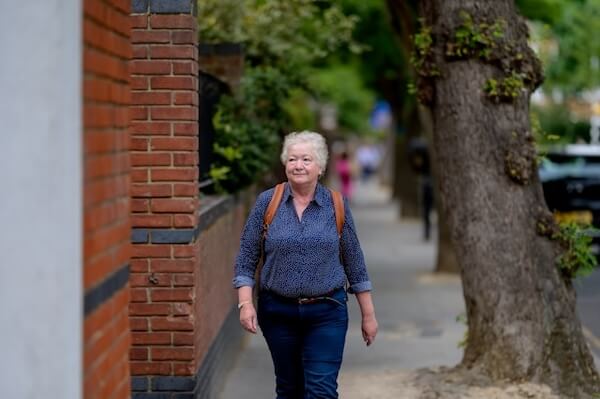
There is a particular kind of silence that settles into a house when you live by yourself. It isn't the peaceful kind you look forward to after a long day; it's the heavy sort that hangs around on a Sunday afternoon when the footy is on but there's no one to yell at the TV with. For a lot of older Australians, this isn't just a mood. It's becoming a permanent fixture of daily life.
A recent Monash University study, published in Archives of Gerontology and Geriatrics in April 2026, found that older Australians without close family ties — particularly those with no partner and no children — are far more likely to report severe loneliness. In long-term care, that group was nearly three times as likely to be severely lonely as those with both a partner and children. Earlier research from the same group found around one in five Australians over 65 feel lonely, with rates climbing higher in residential aged care.
The numbers make sense if you've lived it. When you lose the person who remembers the name of the neighbour you met ten years ago or who knows exactly how you take your tea, you lose a lot of your daily social glue. Without those tiny, incidental conversations, the days start to feel like they're on repeat.
Why showing up solo is the hardest part
The hardest part about all of this isn't necessarily being alone; it's the friction of fixing it. It is genuinely nerve-wracking to think about joining a new group when you've been out of the loop for a while. There is that internal monologue that kicks in: Will they already have their cliques? Am I going to be the oldest person there? What if I'm just rubbish at the game? Most of us would rather stay on the couch with a crossword than risk the first ten minutes of standing awkwardly in a community centre doorway.
I've seen this play out at local parks and community hubs. The people who actually make it through the door usually find that the activity is just a polite excuse to be near other humans. You don't have to be a pro. In fact, being a bit mediocre at it is often a better conversation starter. There's a lot of common ground to be found in laughing at your own lack of coordination. We've written before about how social connection and physical activity reinforce each other in older adults, and the pattern shows up again and again.
Low-impact sports built for older bodies
Lately, things like pickleball have taken off because the court is about a quarter the size of a tennis court (6.1 metres wide by 13.4 metres long), and the pace is a bit more forgiving on the knees than traditional tennis (Synthetic Sports Group). It's hard to stay formal when you're hitting a perforated plastic ball back and forth across a low net. If you've never picked up a paddle, our pickleball basics guide walks through the first session, and the health benefits of pickleball piece explains why doctors keep recommending it.
If running isn't on the cards anymore, walking sports are popping up everywhere. Walking netball follows the standard netball positions and structure, but players must keep at least one foot on the ground at all times. No running, no jumping. We've got a whole piece on walking netball in Australia if you want a closer look at how a session runs. Walking football works the same way: no running, no jogging, no slide tackles, and the ball can't go above hip height (Football NSW). It sounds a bit silly until you're in the middle of a match and realise you're actually having a proper go without the fear of a hamstring injury. Football Federation Australia received government funding under the "Move It Aus – Better Ageing" program in 2019 to roll walking football out nationally, and most state federations now run sessions for players aged 50-plus.
Walking groups: the easiest first step
If you prefer something a bit more low-key, walking groups are the backbone of most Australian suburbs. Heart Foundation Walking has been running free, volunteer-led walking groups since 1995, and has supported more than 100,000 Australians over that time. You can search for a group by suburb or postcode and filter by pace, day of the week, or whether dogs are welcome. The pace is usually set by whoever is slowest that day. It's less about the step count and more about the coffee at the end. If you're new to it, our piece on why walking groups are so popular covers what to expect.
The secret to getting past that initial awkwardness usually lies in the activity itself. It's much easier to strike up a conversation when you're both focused on a shared task. The sport acts as a buffer. It gives you something to look at other than each other's expectant faces. If the conversation hits a lull, you can comment on the weather or the play, and the pressure instantly drops.
The first morning is always the worst
I've spent a lot of time looking through the groups in our seniors' activity directory, and almost everyone there started in the exact same boat. They all had that first morning where they sat in the car for five minutes, debating whether to just drive to the shops instead.
Taking that first step is usually the hardest part of the whole process. Once you've pushed past the initial nerves of showing up, you usually find that most groups are just relieved to have a fresh face and a new story to hear. It's about finding those small pockets of belonging that make a house feel a lot less quiet.