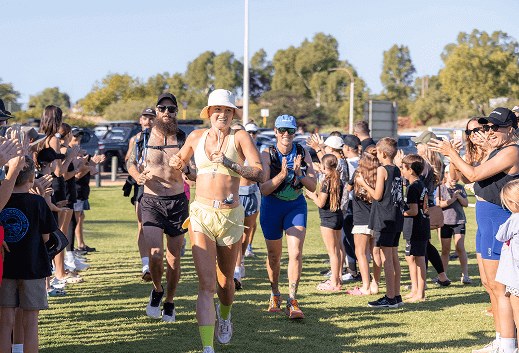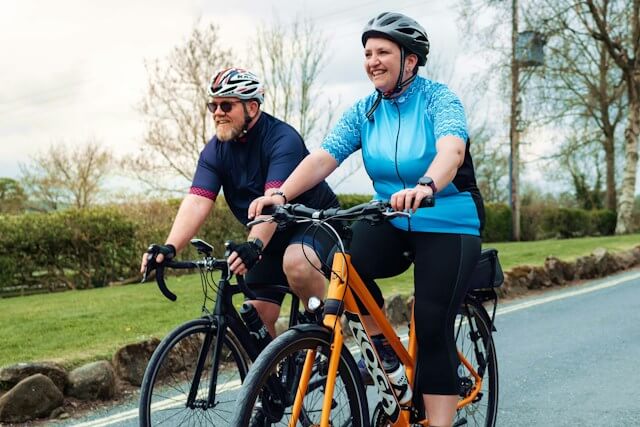

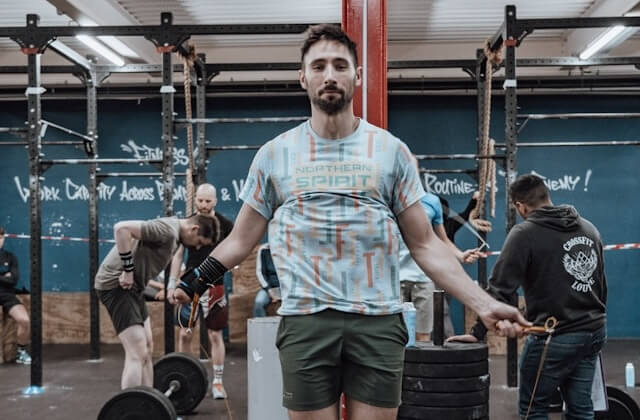
Imagine getting a $500 voucher from the government to spend on a gym membership, yoga classes, or swimming lessons for your family. Or your boss finally being able to offer you a gym membership as a work perk — tax-free. Sound too good to be true?
It might not be. Australia's peak body for exercise and active health, AUSactive, has just put forward a bold proposal to the Federal Government that could make getting active more accessible, more affordable, and more supported than it's ever been. And if it gets up? It could change the way this country thinks about health forever.
Why Getting Active Keeps Feeling So Hard
Let's be real — most of us know we should move more. But knowing it and doing it are two very different things, and for a lot of Australians, the barriers are very real.
Cost is the number one reason people don't join a gym or sign up for fitness classes. In fact, 72% of Australians who don't use health and fitness facilities say they simply can't afford it. With the cost of living squeezing household budgets from every direction, a gym membership can feel like a luxury, not a necessity.
And yet the cost of not moving is far higher — we're just not the ones paying it directly. Right now, the Australian government spends over $10 billion a year on overweight and obesity, $38 billion on preventable lifestyle-related health conditions, and there were 788,000 potentially preventable hospitalisations in 2023–24 alone, costing $7.7 billion. Nearly half of all Australians live with a chronic health condition, and three quarters of us aren't meeting basic physical activity recommendations.
The problem isn't that Australians don't want to get active. It's that the system hasn't made it easy enough — or affordable enough — for most people to actually do it.
The Proposal That Could Change Things
AUSactive's Move to Prevent submission to the 2026 Federal Budget puts forward a $636 million investment plan built around one powerful idea: prevention is cheaper than treatment, and movement is the most effective prevention tool we have.
Regular physical activity can reduce your risk of developing type 2 diabetes by up to 58%. It can cut the risk and severity of anxiety and depression by 20 to 50%. It protects your heart, your joints, your bones, and your mental health. And unlike most medications, the "side effects" are almost entirely positive.
So what exactly is AUSactive asking the government to do? Here's the part that directly affects you.
$500 Fitness Vouchers for Families
This is the headline act, and it's a big one. AUSactive is proposing means-tested annual vouchers worth $500 per family, redeemable at gyms, fitness studios, aquatic centres, yoga and Pilates studios, and other exercise and active health facilities.
The idea is simple: lower the upfront cost, and more people will take the leap. Research backs this up — even a modest 10% reduction in gym fees could bump national participation from 23% to 35%, preventing around 59,000 cases of chronic disease and generating nearly $1.4 billion in combined healthcare savings and productivity gains.
The vouchers are designed to be used as a family, too — parents and kids moving together. Because when the whole family is involved, healthy habits stick. Kids who see their parents prioritising movement are far more likely to carry that into adulthood.
Your Boss Could Finally Offer You a Free Gym Membership
Here's something you might not know: right now, if your employer wants to give you a gym membership as a workplace perk, they get taxed on it as a "fringe benefit." But if they build a gym inside the office? That's completely tax-free. It's a rule that makes no sense, and it means the vast majority of Australian workers miss out on a benefit that could genuinely improve their health.
AUSactive is calling for Fringe Benefits Tax (FBT) reform to fix this inconsistency — removing the tax on gym memberships and physical activity benefits so employers, big and small, can actually offer them without a financial penalty.
The numbers are compelling: 91.8% of employers say they would offer gym memberships if the tax settings allowed it. With mental health absenteeism alone costing Australian workplaces around $11.5 billion a year, getting employees moving isn't just good for them — it's good for business.
Your GP Could Soon Refer You to a Personal Trainer
One of the more transformative ideas in the submission is the push to embed physical activity into the healthcare system as a proper clinical intervention — not just a "try to move more" throwaway comment at the end of a consultation.
AUSactive wants to see accredited exercise professionals formally integrated into care pathways for conditions like type 2 diabetes, cardiovascular disease, mental health, and age-related decline. That means your GP being able to refer you to a qualified trainer or exercise physiologist the same way they'd refer you to a physio or a specialist.
This also matters for anyone using or considering GLP-1 weight loss medications like Ozempic. These drugs can be effective, but without structured exercise, they can cause significant loss of muscle mass and bone density — a real health risk, especially for older Australians and women. AUSactive wants exercise professionals built into those care plans from day one, protecting long-term health outcomes.
A National Game Plan for Getting Australia Moving
Underpinning all of this is a call for something Australia has never actually had: a single, government-owned National Physical Activity Strategy.
Right now, physical activity policy is fragmented across different departments and levels of government, with no unified national direction. AUSactive wants to change that with a whole-of-country approach — covering schools, workplaces, community spaces, transport, and healthcare — supported by a national public health campaign to inspire Australians to move more.
Think of it as Slip. Slop. Slap. for physical activity — a campaign with clear, simple messaging that makes movement feel normal, achievable, and worth prioritising.
The campaign would be backed by AUSactive's own Million Moves program, a community-based initiative already independently evaluated by Murdoch University and proven to increase physical activity and improve wellbeing. The goal is to scale it nationally so that no matter where you live or what your fitness level is, there's support available to help you get started and keep going.
What You Can Do Right Now
This submission is in front of the Federal Government ahead of the 2026 Budget. Whether these proposals become reality depends on political will — and political will is shaped by public awareness.
If any of this resonates with you — whether it's the vouchers, the workplace benefits, the idea of your GP recommending a trainer, or simply the belief that movement should be accessible to every Australian — talk about it. Share this article. Bring it up with your friends, your family, your employer. The more Australians understand what's possible, the harder it becomes to ignore.
In the meantime, the best thing you can do for your health hasn't changed: find something you enjoy, and do it regularly. Browse our activities directory, find a gym, studio, pool, or walking group near you, and take that first step.
The government might be about to make it a whole lot easier.
But you don't have to wait.
Source:
AUSactive 2026 Pre-Budget Submission — "Move to Prevent: Increasing physical activity to reduce Australia's ill health burden." Read the full submission here.